Careful, this is the point people get wrong most often: the visit to Vivara is NOT booked on GetYourGuide. The official ticket office is liveticket.it/vivararns, and there is no alternative: there is no ticket office at the bridge, and without an online booking you do not get through the gate. Anyone directing you elsewhere is sending you to the wrong place.
That said: it is the experience with the best ratio of price to value on the whole island. Ten euros an adult, two and a half hours with a guide, inside an uninhabited state nature reserve that nobody enters for the rest of the year. The reserve’s own page has all the details; this one is about how the visit works.
Prices and times for 2026
The rates published by the reserve for 2026 are clear, which is not a given on Procida: adults 10.00 EUR; children from 8 to 12 years 3.00 EUR; Procida residents 5.00 EUR; groups over 25 people 6.00 EUR a head; school parties 3.00 EUR. Free under 7 and for people with disabilities.
The 2026 calendar, published as far as 1 November, changes three times over two months: from 28 August to 10 September departures at 09:30 and 16:30; from 11 September at 09:30 and 16:00; from 25 September only Friday to Sunday, with a single slot at 09:30. Monday is always closed.
That switch on 25 September is where almost everybody comes unstuck. People arriving in October expecting two slots a day find themselves with three usable days a week and a single time. If Vivara is the reason for your trip, build your dates around this.
How to book, step by step
You buy online at liveticket.it/vivararns, and that is it. The slots are capped, 25 visitors maximum: in the busy months they sell out, and turning up at the bridge hoping for a free place is the surest way to lose the morning.
There is no published telephone number. The only contact is the address [email protected]: if you need confirmation or you have a question about accessibility or age, write a few days in advance, not the evening before.
One thing worth saying plainly: on GetYourGuide, at Procida, the offer is almost entirely maritime — boat trips, hire, excursions from the mainland. There are no walking or food tours, and Vivara is not on sale there. It is not an omission by the site: it is that the reserve sells its own tickets itself.
What you really need to bring
Flip-flops and unsuitable footwear are banned: you need walking boots, and anyone turning up without them does not get in. It is not a polite form of words, the ban is enforced at the gate.
Add water and a hat. Two and a half hours on foot, and on the islet there is absolutely nothing: no bar, no facilities, nowhere to get a drink. It is a reserve, not a park with amenities.
It is also worth saying what the visit is not. You do not swim, there is no beach, you do not wander round on your own: you stay with the group, on the path, for two and a half hours. Anybody after a day at the sea has come to the wrong place and would do better to stay at the Chiaiolella beach, two hundred metres from the bridge.
What you see in two and a half hours
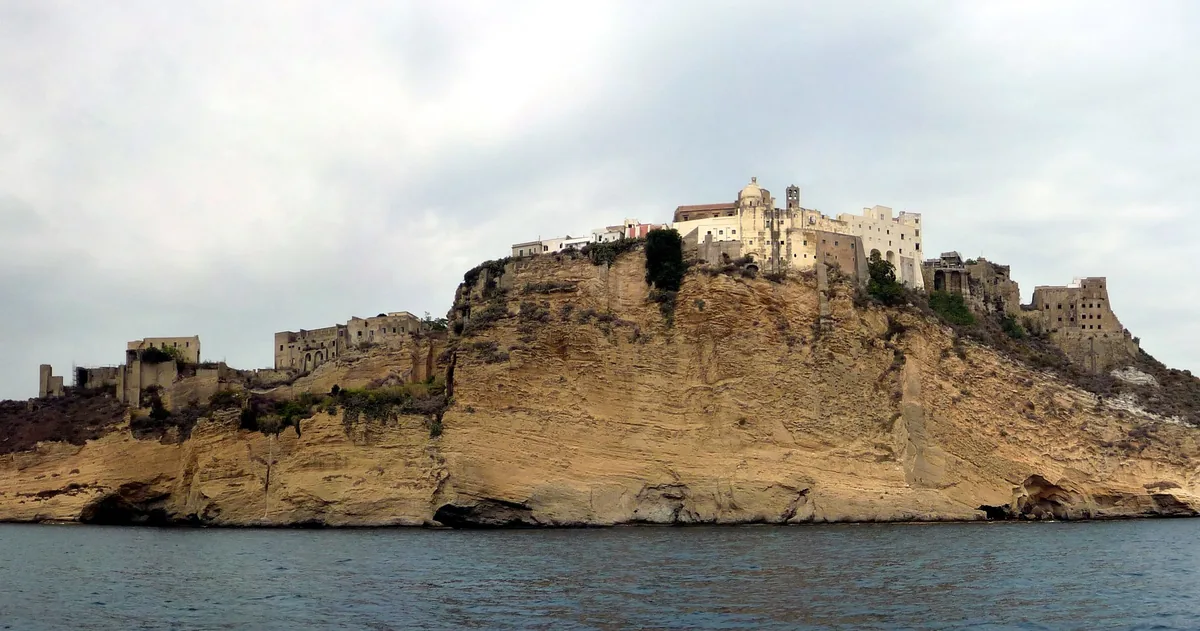
Vivara is a crescent-shaped volcanic islet of about 36 hectares, with a perimeter of three kilometres and a high point at 110 metres. The shape is the remaining rim of a crater: on the age the sources do not agree — it runs from about 40,000 to about 55,000 years, while the figure of 4,000 years that often circulates refers to the prehistoric settlement, not the volcano. Say tens of thousands of years.
The archaeology is serious. There is a Bronze Age settlement here with imported Aegean pottery, datable to between the 17th and the 14th century BC, identified in the 1930s by the archaeologist Giorgio Buchner; systematic excavations began around 1975. Three thousand five hundred years ago this islet was a trading node in the Mediterranean.
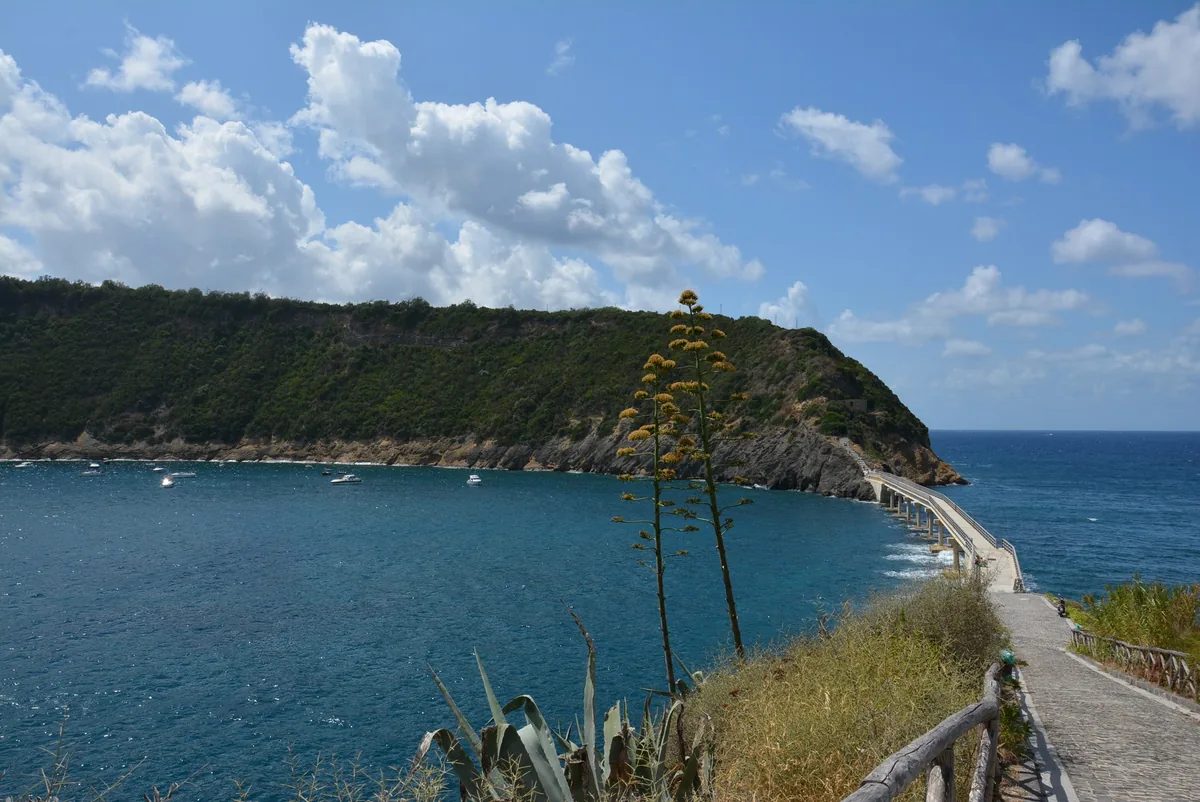
Then there is the scrub. Grown without inhabitants for decades, it is dense: do not expect continuous views, you often walk inside the vegetation, with sudden openings onto the sea and onto Procida. The coast falls within the Regno di Nettuno marine protected area. The reserve was established by ministerial decree on 24 June 2002.
Getting to the bridge
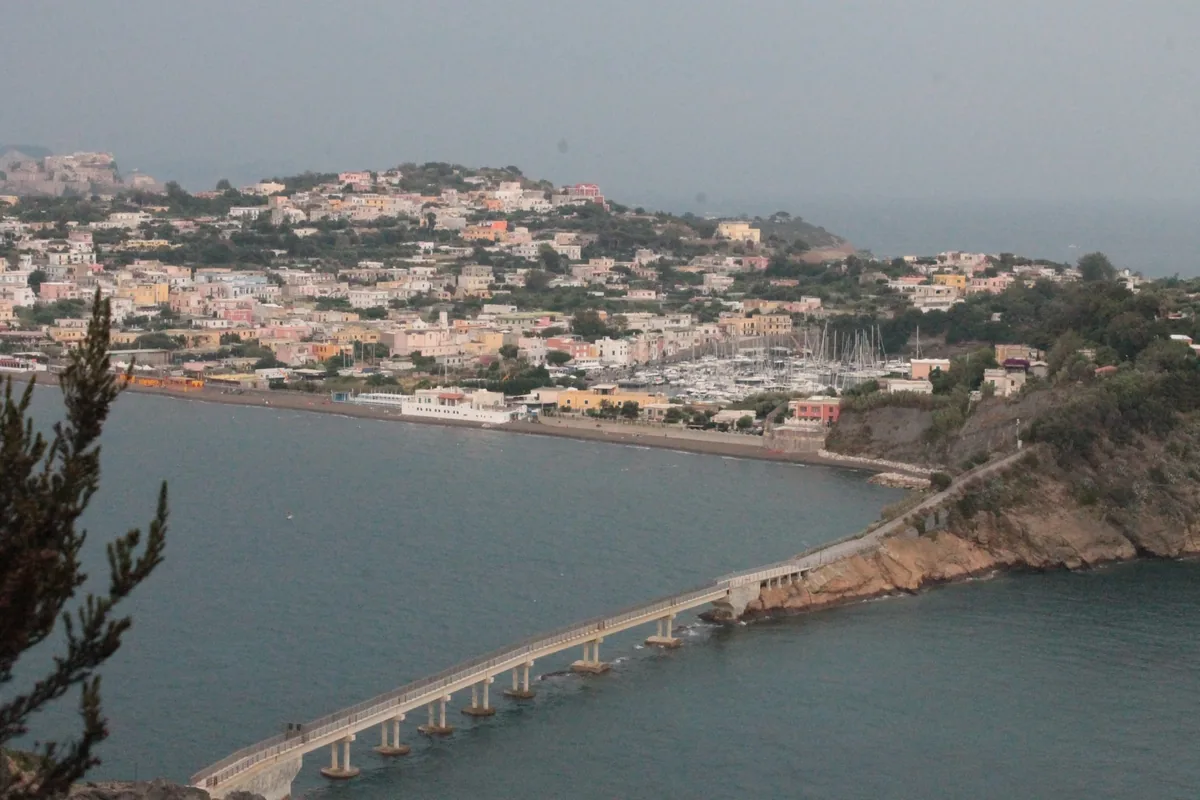
The footbridge starts from the Chiaiolella and is not open to vehicles: it also carries the water main that supplies Ischia. You reach the Chiaiolella on the L2 bus from the terminus at Marina Grande, or by road: it is the easiest part of the island to reach. The real times of the bus routes are in getting around Procida.
Walking as far as the gate is free and the stroll is worth it even without a ticket, especially towards sunset, when the sun drops behind the islet. But the gate is where you stop without a booking: there is nobody on the other side to persuade.
Block out half a day, not two and a half hours: there is also the time to get there and back. Do not squeeze the visit in before a return hydrofoil. The route from land is described in the Chiaiolella–Vivara walk, and after the walk the seafront of the little harbour is a few minutes away: Da Mariano is one of the addresses Procidans mention first.