San Michele Arcangelo is the patron saint of Procida, and the island celebrates him twice a year: on 8 May, the commemoration of the miracle, which is the date felt most deeply and the one with the procession; and on 29 September, the liturgical feast. In 2027 8 May falls on a Saturday. These are fixed dates: they do not move about like Easter.
The reason this feast exists lies in one precise year, 1535, and in a name still spoken in the bay of Naples with a certain tone: Barbarossa. The feast is the way the island pays a debt five hundred years old.
1535, Barbarossa and the debt
In 1535 the fleet of the corsair Barbarossa attacked Procida. A small island, with no army, its population huddled inside the walls of Terra Murata, which was exactly the kind of prey the corsairs were looking for along this coast. The Procidans put down to the Archangel the intervention that put the attackers to flight: “fire and lightning”, as tradition has it.
From that comes the title of patron and protector. And from that comes the shape of the feast: it is not a generic celebration, it is a thanksgiving with a date and a reason. It is worth bearing in mind as you watch it, because it explains why the procession of 8 May is penitential and not festive.
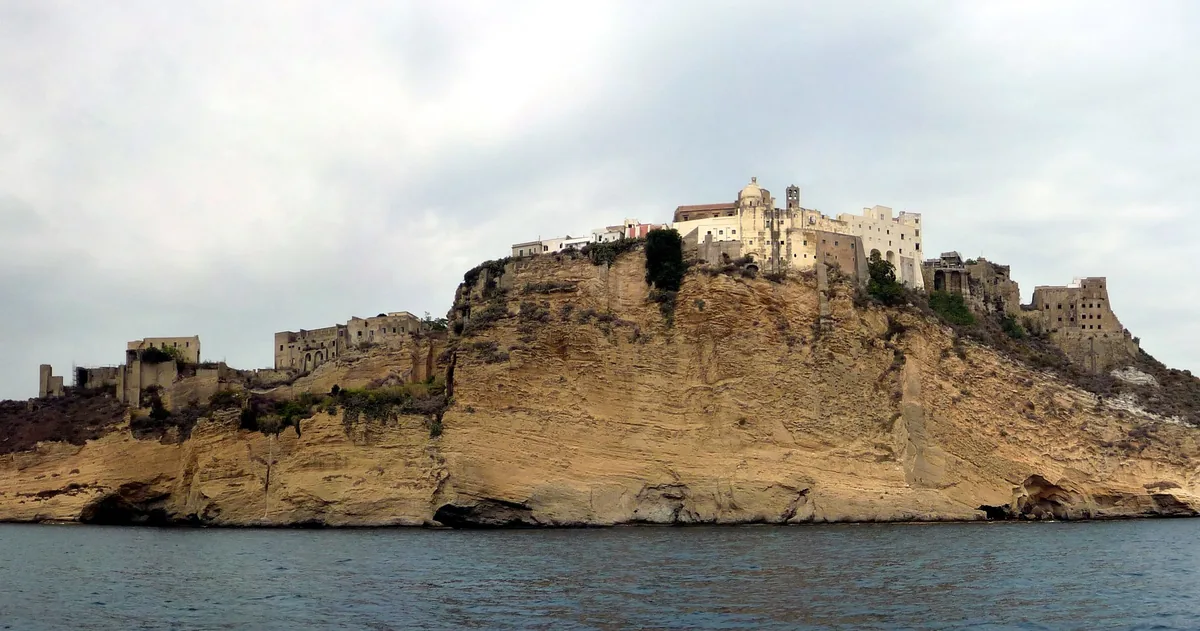
The historical setting can still be read today by walking. Terra Murata is a fortified village: walls and towers attributed to Cardinal Innico d’Avalos d’Aragona, two historic gates, the Porta di Ferro and the Porta di Mezz’Omo. The island huddled up there for centuries precisely because of the Saracen raids, and came down to the lower ground — to the Casale Vascello, for instance — only when the danger eased.
The procession of 8 May
This is the part it is worth being there for. The icon comes down from the Abbey of San Michele, at Terra Murata, to Marina Corricella, the fishermen’s village, which historically is the most devout part of the island. The icon pauses in Piazza Massimo Troisi, the little square on the quayside.
As it passes, the fireworks and the sirens of the fishing boats answer it. This is the detail no photograph gives back: the noise. A pedestrian village, closed in between the houses, with the boats sounding from the water.
In the evening the procession climbs back to the Abbey, with the clergy and the confraternities. The way down and the way up between Terra Murata and Corricella are the same as on the classic island walk: steps, a great many steps. If you have difficulty walking, the right place to wait is the quayside at the Corricella, which you can reach on foot from one end of the harbour without doing the whole descent from above — although a genuinely easy way into the village does not exist.
The times, and why they have to be checked
The times that follow come from a historic programme for 8 May and have to be checked every year: masses at 8:00, 10:30 and 19:00; penitential procession from the Abbey to the Corricella at 11:30; return procession to the Abbey at 20:00, with clergy and confraternities. These are not confirmed times for 2027: ask at the parish or check the Abbey’s website in the days beforehand.
There is one more reason to check again. The Abbey’s official site warns that in 2026, the Year of the Millennium, the calendar of openings may be subject to changes and suspensions without notice. When a place writes that about itself, it is worth taking seriously.
A last note on visits: the Abbey’s opening service runs from Holy Week to All Saints, with free guided visits. On feast days, however, the liturgy comes first: during the services there are no visits. If your aim is to see the interior in peace, 8 May is not the right day; if your aim is the feast, it is.
The Abbey, the statue and the thousand years
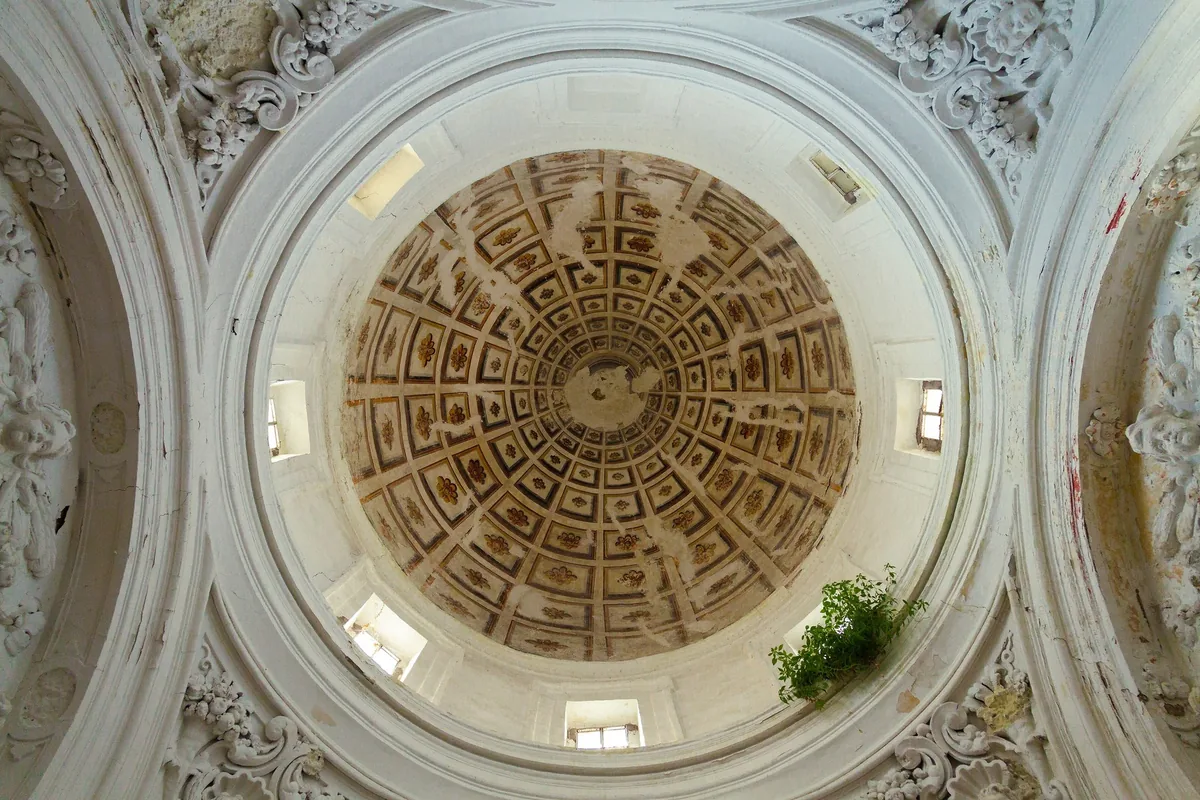
The monastic presence on the rock is documented from 1026: 2026 is the Year of the Millennium. The architecture you see today, though, is sixteenth-century, and therefore contemporary with exactly that century of raids and fortifications.
The silver and gold statue of San Michele dates from 1727 and is the object the devotion turns around. Inside there are also a bellows organ in carved and gilded wood of 1770, the work of Domenico Antonio Rossi, and a library of about eight thousand volumes, with sixteenth-century parchment choir books and a geographical atlas of 1570.
A warning we give everywhere, because many guides get it wrong: the underground rooms cannot be visited at present, as the official site states. They continue to be advertised as open by a good many sources. Do not count on them, and read the page on the Abbey of San Michele before you climb up.
May or September?
If you can choose, choose May. 8 May is the date felt most deeply, the one with the procession down to the village, the fireworks and the sirens. 29 September is the liturgical feast: it is celebrated, but the island’s emotional weight is in the other one.
May also has the advantage of the season. It is one of the island’s good months: the sea starts to be usable, the restaurants have reopened, and the crowds of July and August are not there yet. The month-by-month picture is in when to go to Procida, and the page on May in Procida goes into the detail.
29 September, on the other hand, has a merit of its own: the island is empty, the sea is still warm and you find room everywhere. If you are more interested in everyday Procida than in the moment of maximum turnout, that date works better. The same logic applies to September in general.
How to organise the day
The feast is free: you watch from the street, like all the island’s processions. What it takes is arriving in time and choosing your spot well.
With the historic programme in hand, the key moment is the middle of the morning, when the procession leaves the Abbey. Climbing to Terra Murata takes time: from the harbour at Marina Grande there are the C1 and L1 lines, or a good twenty minutes on foot, all uphill. Leave a margin.
If you want to see the arrival at the Corricella without doing the descent twice, go down early and wait on the quayside: that is where everything concentrates, and it is also where you then eat. La Lampara, up above, and Caracalè on the quay are two of the addresses to book in advance: on 8 May the island fills up. The full round-up is in the restaurant guide.
For sleeping, in May the properties are generally open but rooms are few everywhere: ten here, nine there. The page on where to stay in Procida sets out the areas and the prices. If instead you are weighing up another of the island’s great appointments, the Processione dei Misteri on Good Friday is the most imposing event of the year.