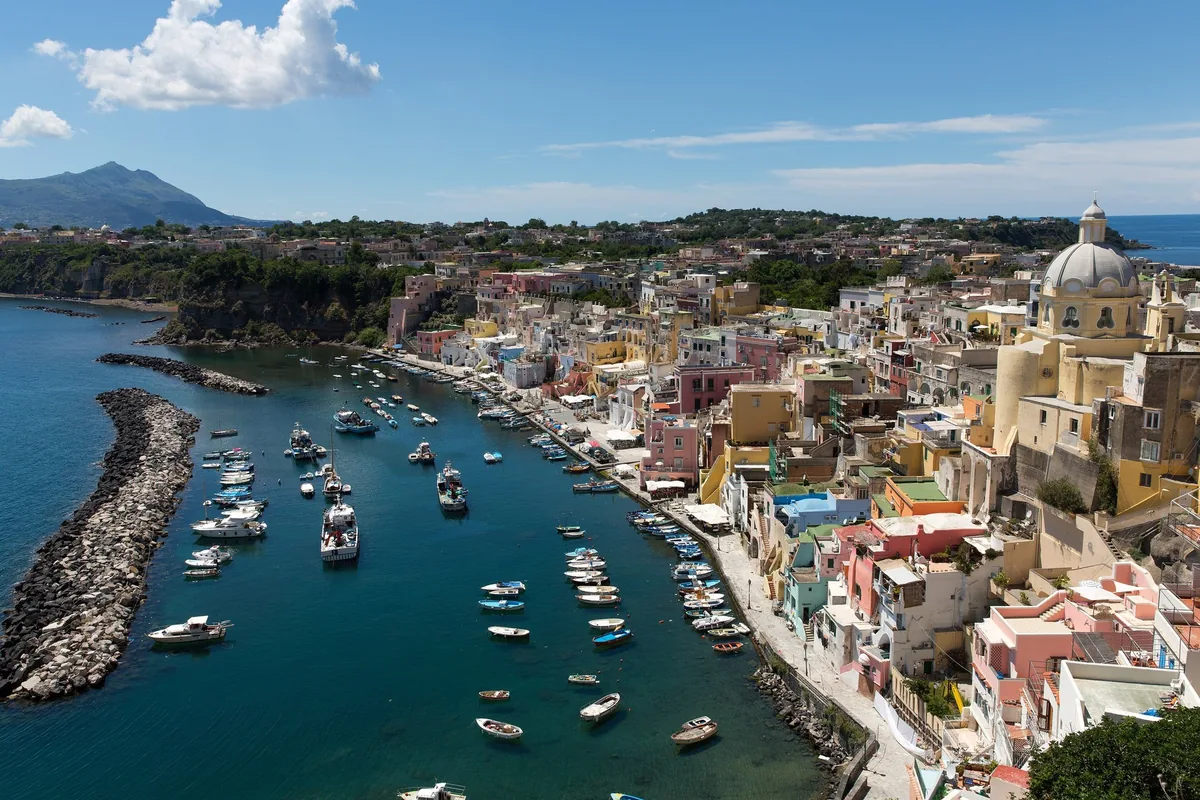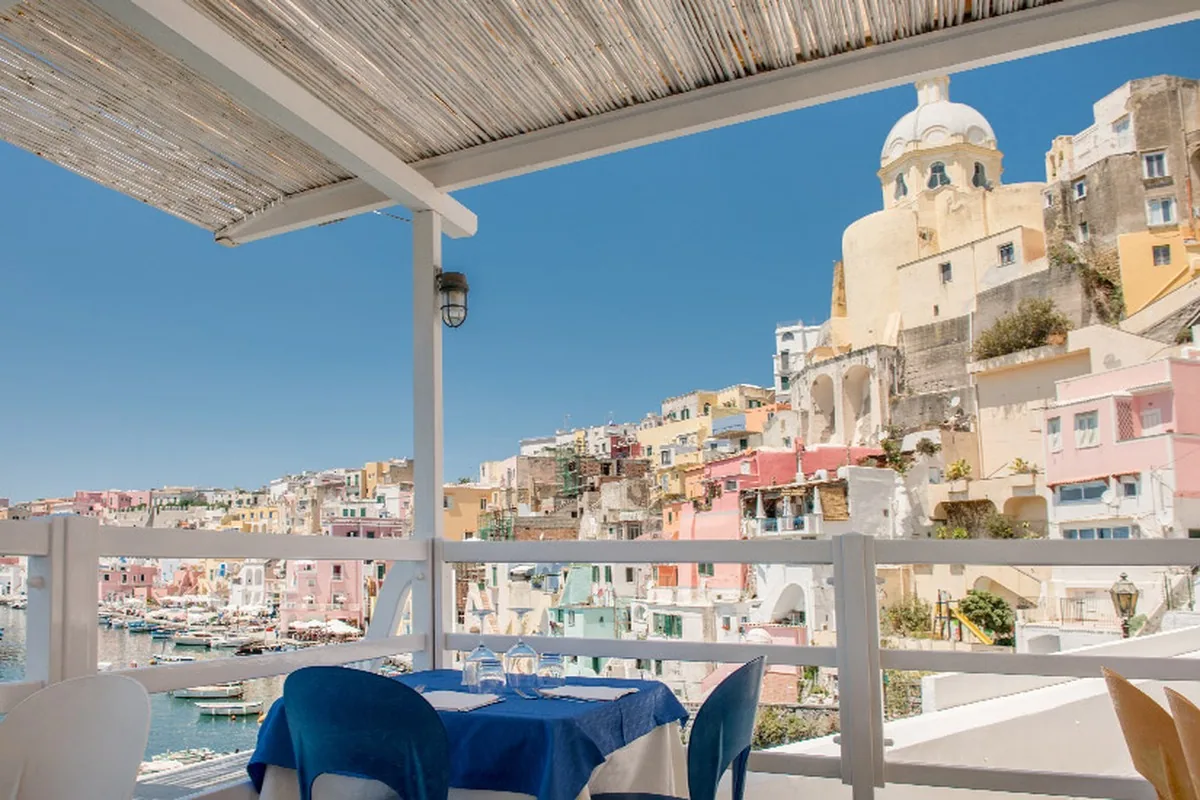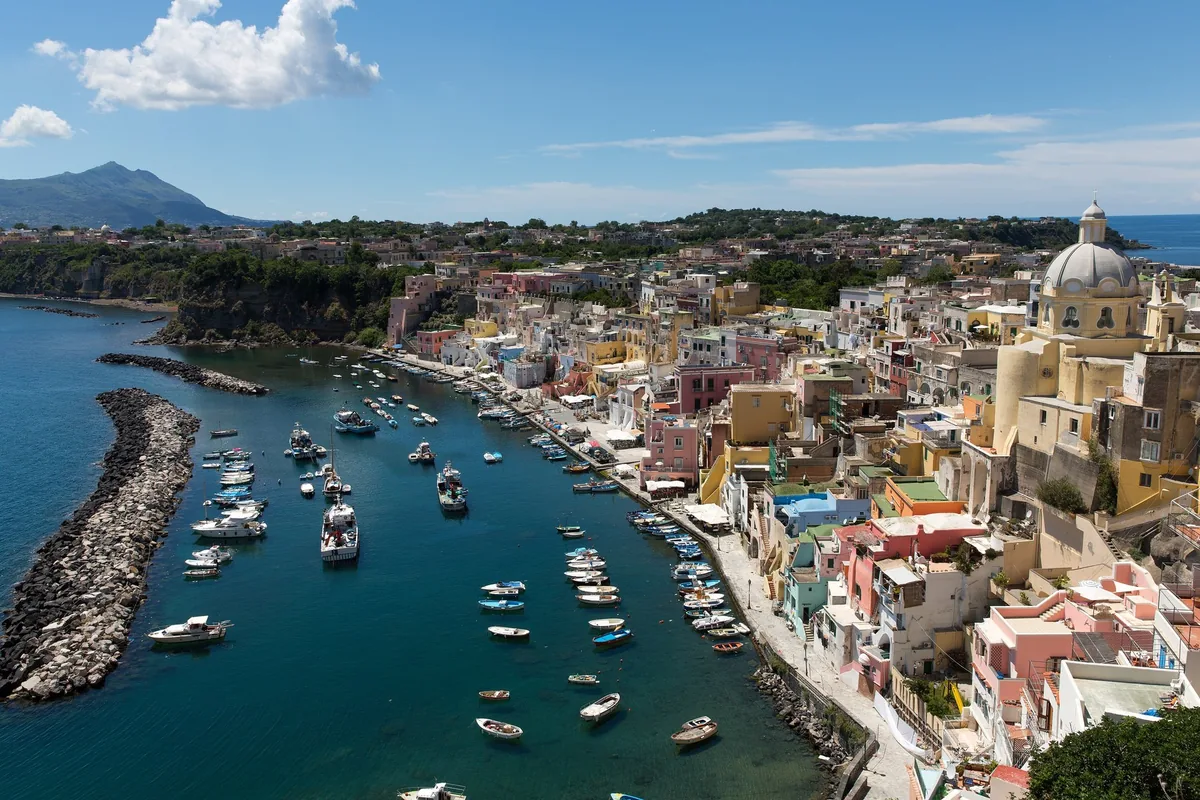
The first time, you hear it before you see it. You go down a narrow stairway between the walls, you smell fish and frying, then the steps turn a corner and the village opens all at once: a semicircle of pink, yellow and pale blue houses, piled one on top of another over five or six levels, with the boats pulled up on the shore in front. No cars. No engine noise. Only voices, crockery and water against a hull.
Marina Corricella is the oldest fishing village on Procida, and the harbour as you see it today is seventeenth-century. It is also the image you have in mind when you think of the island, and this time the photograph does not lie: the place is exactly like that. What the photographs do not tell you is that you get there only on foot, by steep steps, and that it is worth knowing before you book.
How you get down
Corricella has no road. It is not a matter of style: the village is built on a slope and no vehicle gets into it. You arrive by four stairways or by sea, and that is all.
The two main ones are the Gradinata del Pennino, which comes down from Via San Rocco, and the Gradinata Scura, from Via M. Scotti. The other two arrive from the two ends of the harbour. The Scura is the more striking, narrow and in shadow between the walls; the Pennino is the one almost everybody uses. Going up, in the August heat, both are hard work.
Anyone with mobility difficulties, a pushchair or a large suitcase needs to know this in advance: there are no short cuts here and there is no vehicle that takes you to the door. The boat service that links the village to the Chiaia beach is the only alternative to the steps, and it concerns the beach, not the luggage. If you sleep here, travel light: the logistics are explained as well in getting around Procida.
How the village is put together
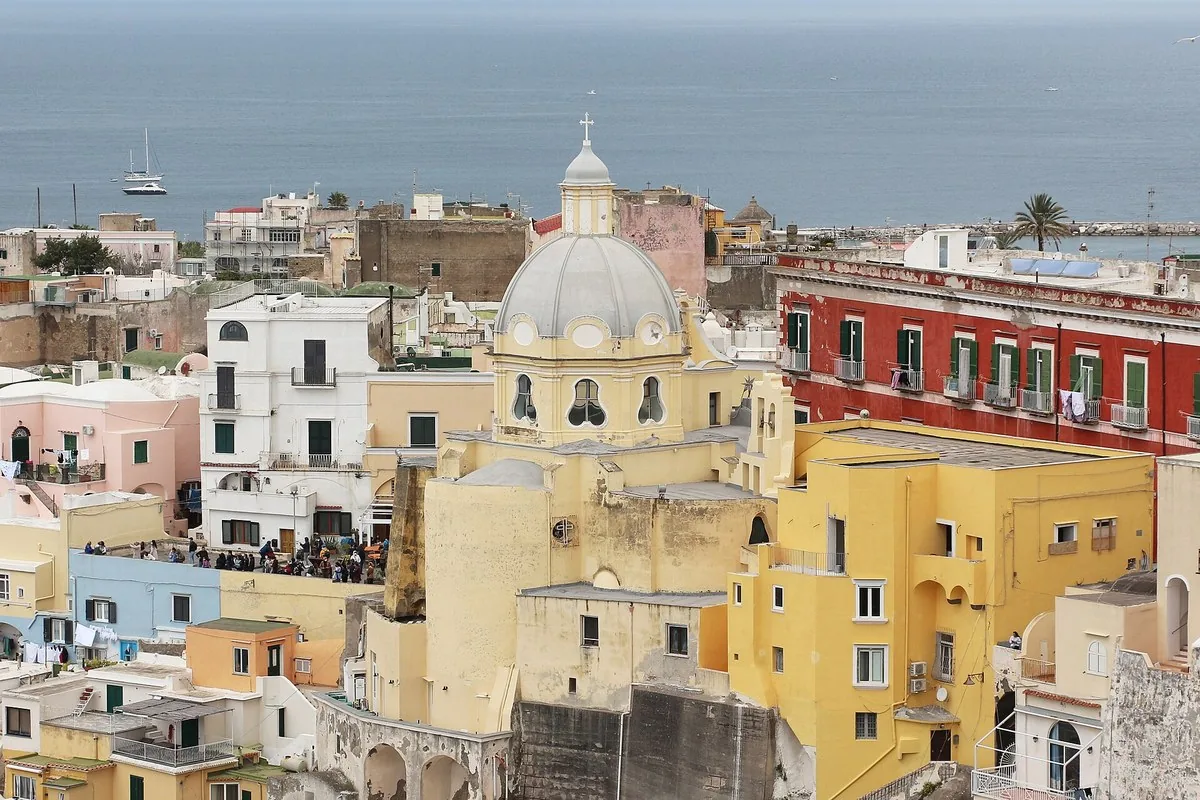
Look at the fronts close up and you understand that nobody designed them together. Corricella is spontaneous architecture: arches, domes, external stairs, loggias, volumes added on top of existing volumes when one more room was needed. The colour was there so that the fishermen could pick out their own house from the sea, and from land it looks like an upturned palette.
The thing to look for is the vefio: the small covered balcony with an arched vault, of Arab influence, looking out over the harbour. Once you have seen one, you recognise it everywhere, including at the Casale Vascello, the courtyard settlement a little higher up.
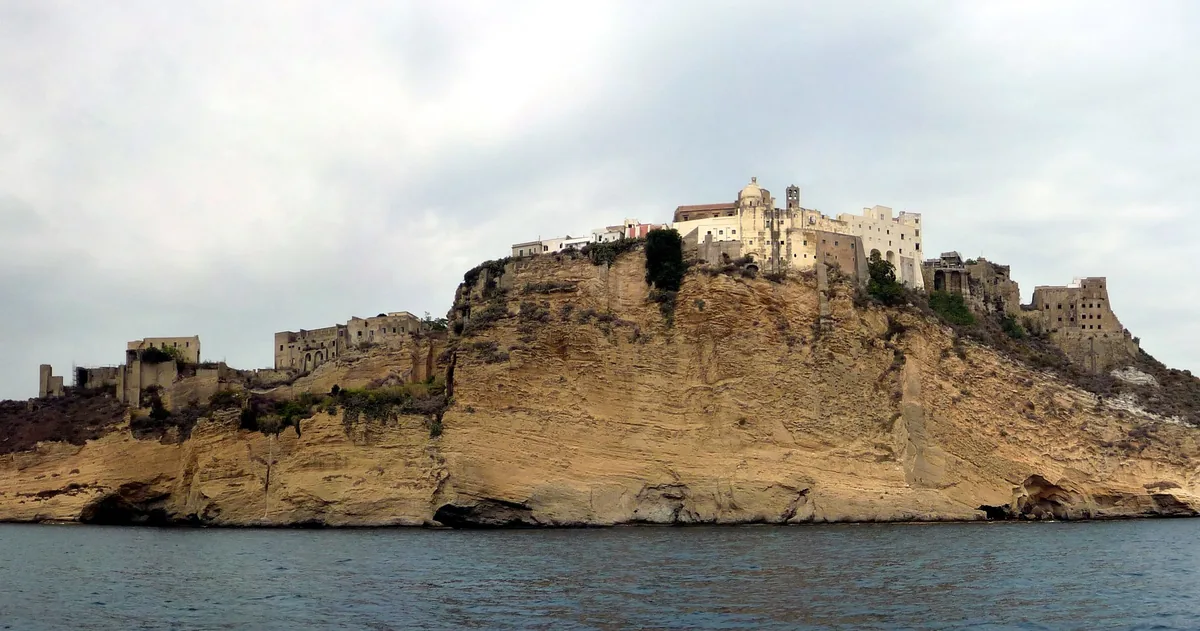
Above the houses, on the ridge, is Santa Margherita Nuova, and higher still the bulk of Terra Murata with the abbey of San Michele. Corricella is looked at from above and Terra Murata is looked at from below: they are two halves of the same view.
Il Postino, here
The little square of the village is called Piazzetta Massimo Troisi, and Corricella is the main set of Il Postino. There are no signs and no marked routes, and that is entirely right: the village has stayed the one in the film because it was not turned into an attraction.
If the film is the reason for the trip, be aware that the most famous beach scene is not here but at the Pozzo Vecchio beach, on the other side of the island, known today as the Postino beach. The full map of the locations is on the page about the Il Postino places in Procida.
Eating on the quay
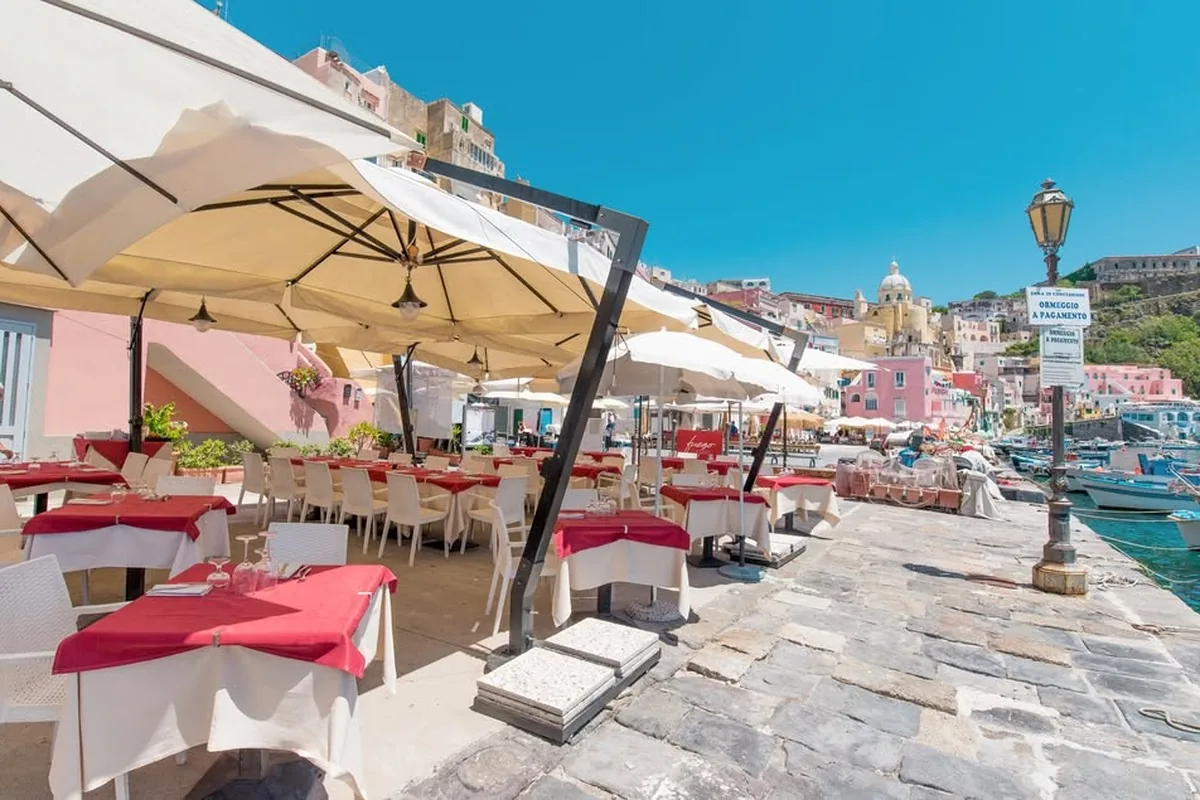
The restaurants stand in a row on the quay, with the tables a few metres from the water: La Lampara, Caracalé, Il Pescatore and Fuego. The position is part of the price, and it is only fair to say so: you are also paying for the table on the water. In exchange, the fish comes off the boats you can see in front of you.
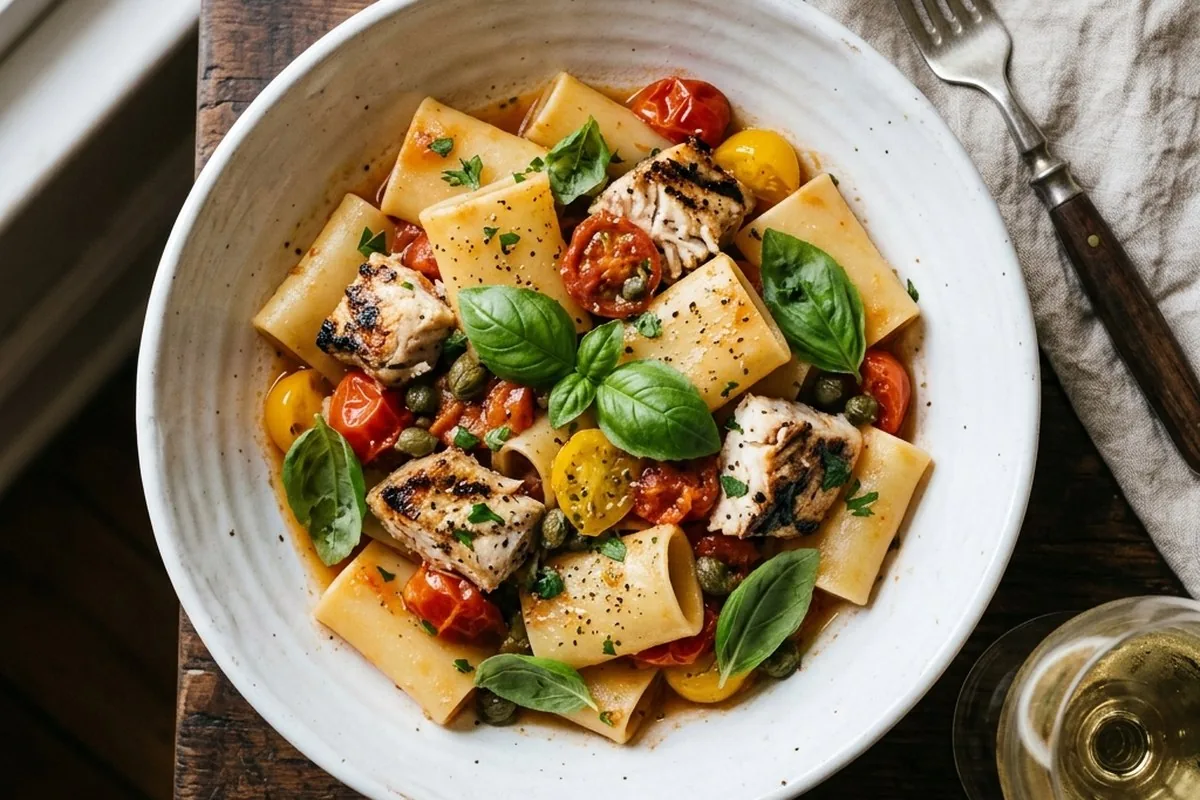
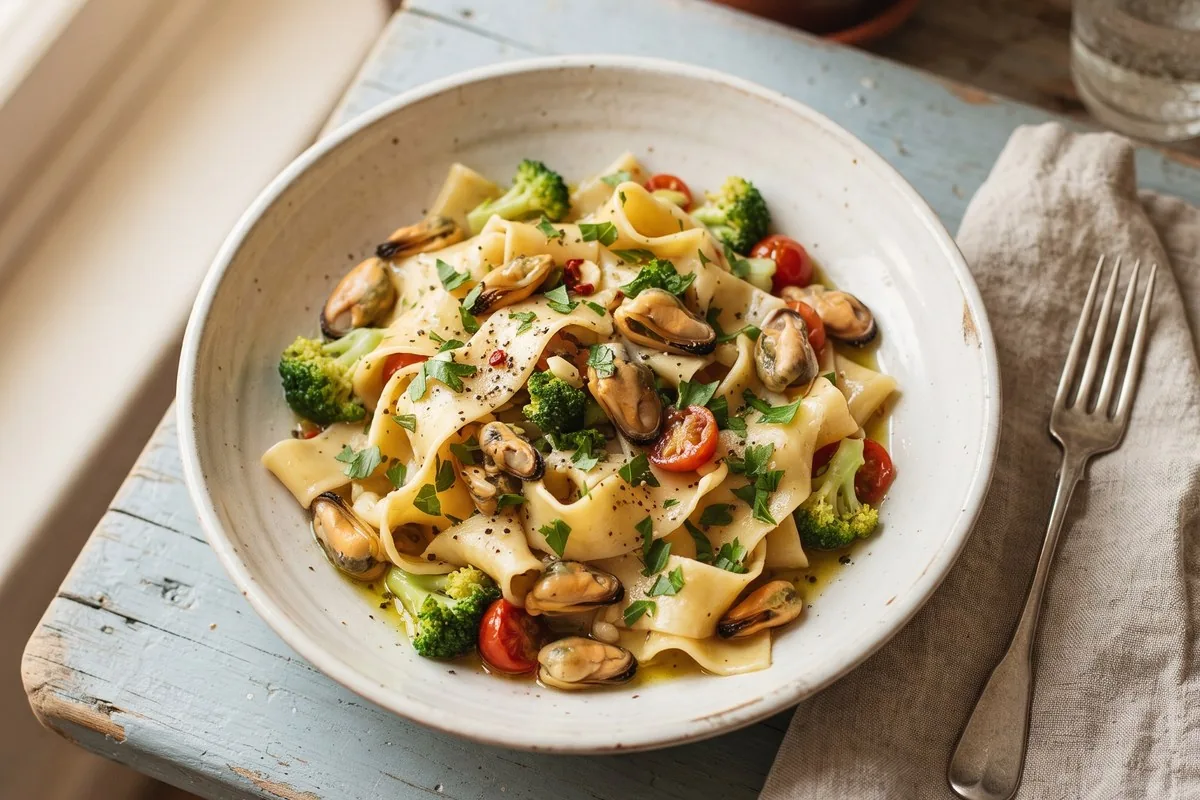
Order simply. The fish of the day, the spaghetti ai ricci when they have them, and the insalata di limoni made with the limone di Procida, which here is large, with a thick, sweet skin. In the evening, book: the front-row tables go early, and in August they go very early indeed. The rest of the choices on the island are in the restaurant guide.
Sleeping in Corricella
Sleeping here is the finest and the most awkward choice on the island, and the two things do not cancel each other out. Waking up with the fishermen under the window is worth the carry; the steps with a suitcase are not, if you have a delicate knee. Hotel La Corricella is the long-standing address on the harbour.
Always ask two things before booking: how many steps separate the room from the nearest road a vehicle can use, and whether the property arranges transport for the luggage. The answers vary a great deal from house to house. The comparison between the villages is in where to stay on Procida.
When to come
The light reaches the fronts from the east, so early in the morning the village is lit and empty: that is the hour for photography, with the boats still and the fishermen sorting the nets. In the afternoon the sun swings round and the front goes into shadow, but the colour turns warmer and the tables fill up.
The worst moment is the middle of the afternoon in August, when the day groups all come down the steps together. If you can choose the month, look at May or September. And if you want the view you see on every postcard — the whole village, head on — you have to climb high or take a boat: from the quay, that photograph does not exist.