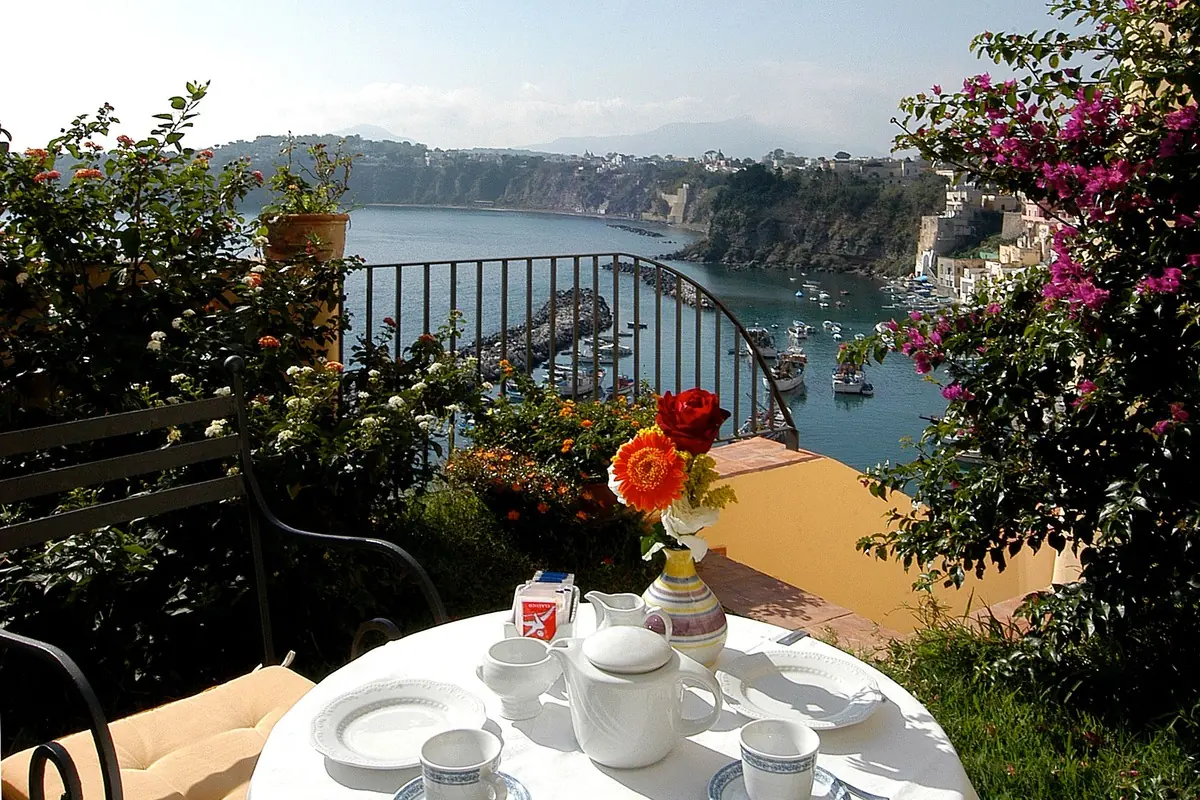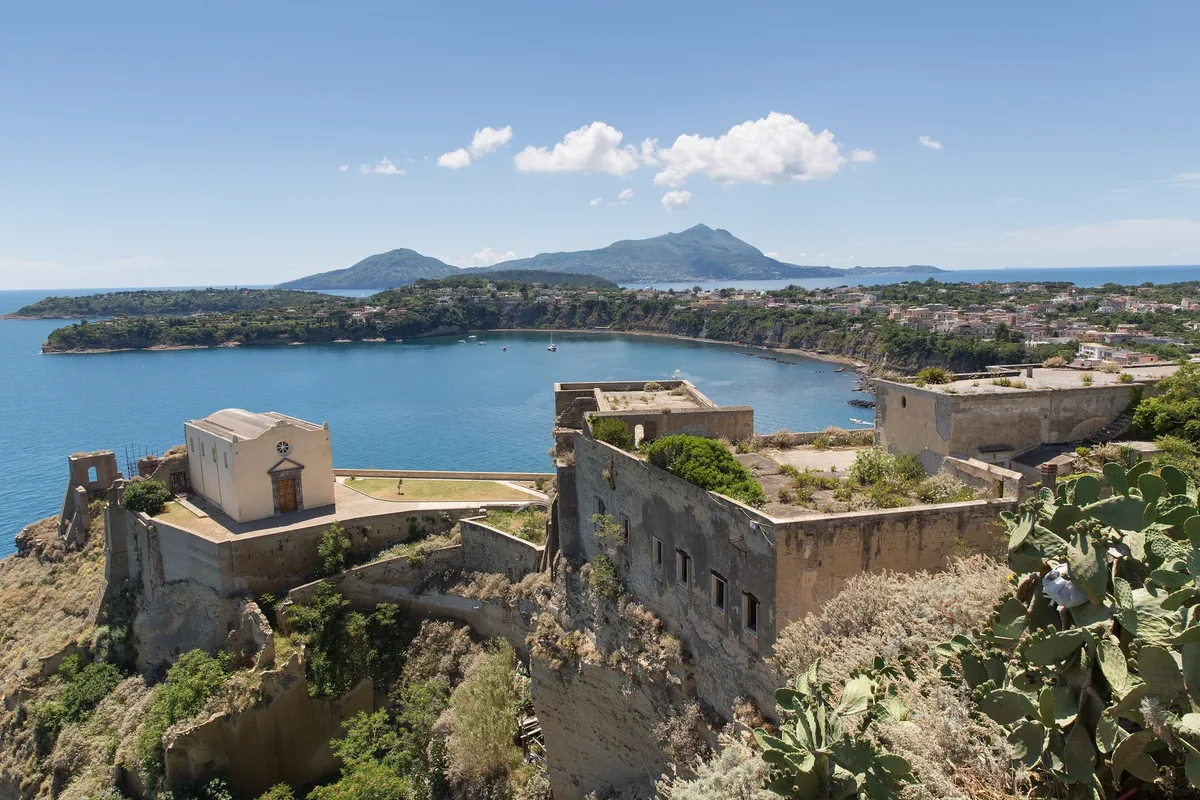
The climb is steep and there is no shade. You reach the top short of breath, you turn the corner of the wall and the island opens up below you: the Corricella in miniature, the boats like commas, the gulf open as far as Ischia. Some eighty metres of height gain, a quarter of an hour of effort, and the photograph you came to take is there.
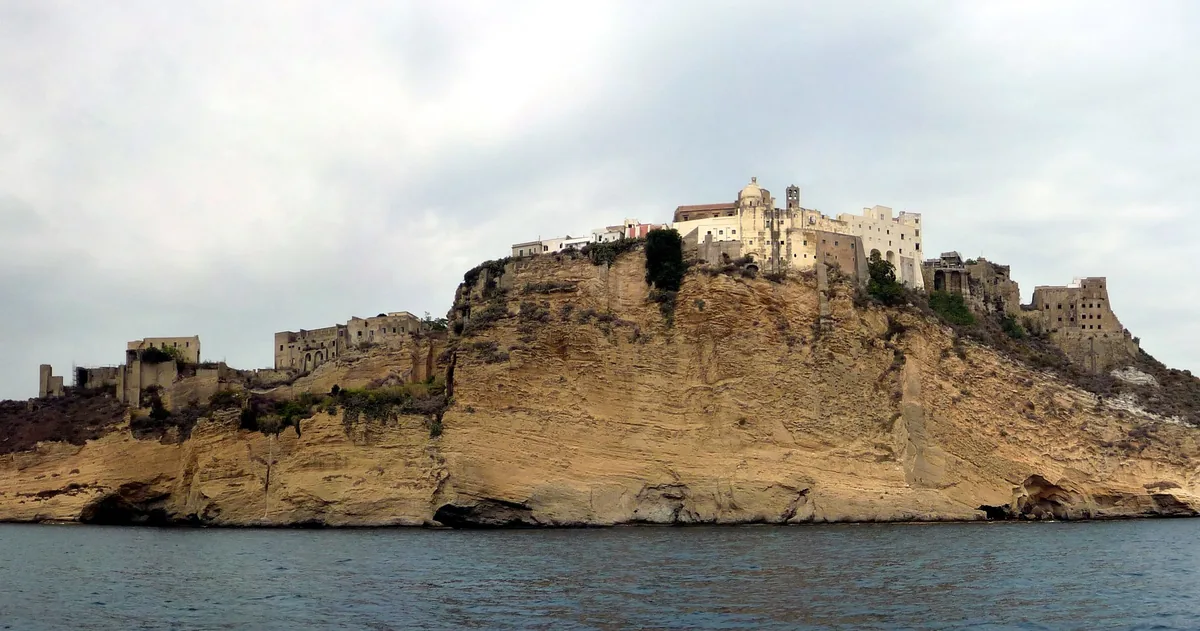
Terra Murata is the acropolis of Procida: the highest inhabited point on the island, around 91 metres according to local sources, closed in by walls and towers. It was a fief of the d’Avalos from 1529, and the defensive system is attributed to Cardinal Innico d’Avalos d’Aragona. People came up here to be safe from the Saracens. People still climb up today for the same reason they did then: from up here you see everything coming.
How you go up
The classic climb starts from Marina Corricella and is steep, exposed and hard in the heat. It cannot be done in a wheelchair, and in July and August it has to be done before ten or after six. Take water with you: on the way up there is nothing.
The alternative is the bus: the C1 and L1 lines come up from the terminus at Marina Grande. Anyone with little time or little appetite for the height gain does it that way and walks down towards the Corricella, which is the right direction: going down, the view is always in front of you. The real timetables and lines are in getting around Procida.
The third way is to combine the two: bus up in the morning, down on foot towards the Corricella for lunch, and back to the harbour by the Pennino stairway. That is a circuit of about three hours, almost all of it downhill, and it is the way most residents would advise anyone with a single day to do it.
The village is an open-air public space: no hours, no ticket, you simply walk in. You pay only where you go inside a building, and that is a single case.
The walls and the gates
The two historic gates are the Porta di Ferro and the Porta di Mezz’Omo, and going through them is the right way to understand how the place is made: a compact settlement inside a wall, with narrow lanes that open suddenly onto empty air.
At the Belvedere dei Cannoni there are two long-range cannon from the Neapolitan Republic of 1799 — the fact appears in one source only, so take it for what it is: a plaque to read, not a fact to repeat elsewhere. Near the belvedere is the permanent museum of the Misteri, the floats of the Good Friday procession, which is the moment when this village really counts for Procidans.
What you visit
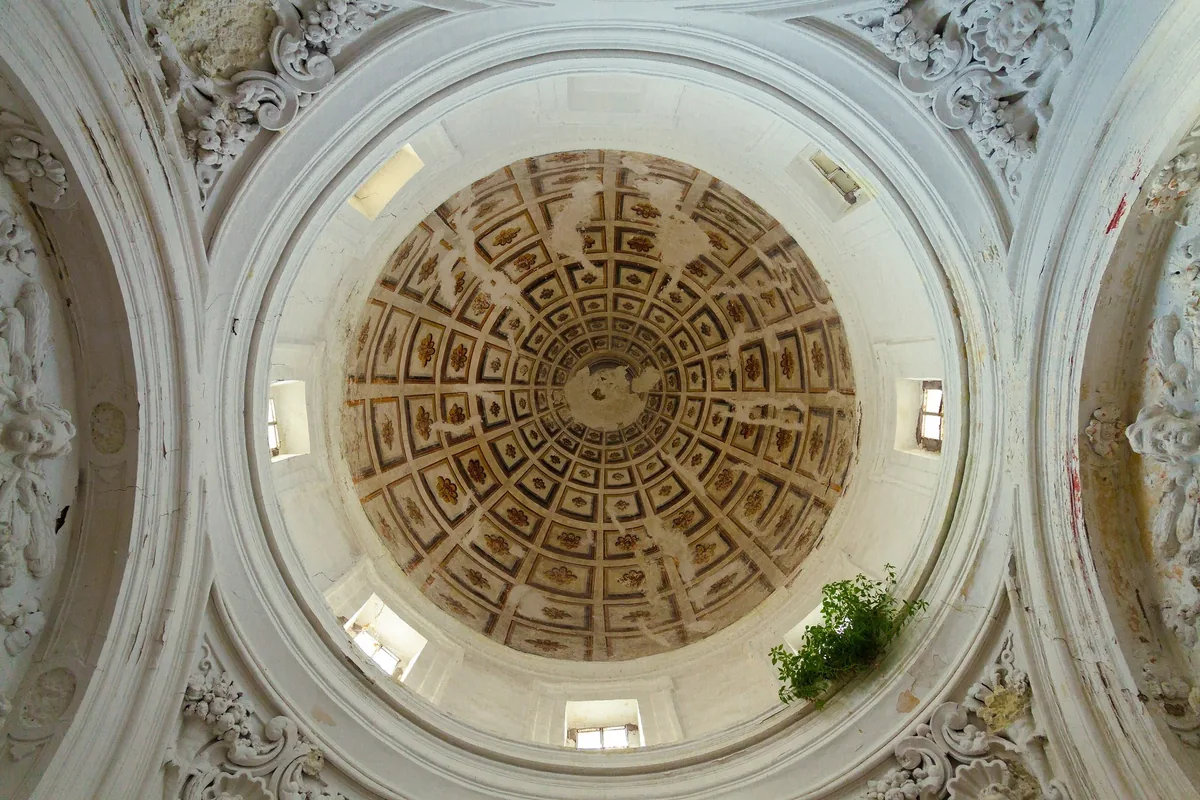
Inside the walls there are three things. The abbey of San Michele Arcangelo is the main one: a monastic presence documented from 1026, sixteenth-century architecture, free entry with a voluntary offering and a guided explanation. Careful with one thing that almost all the guides get wrong: the underground rooms cannot be visited at present, and in 2026, the Year of the Millenary, the opening calendar may change without notice. Check on the official site the day before.
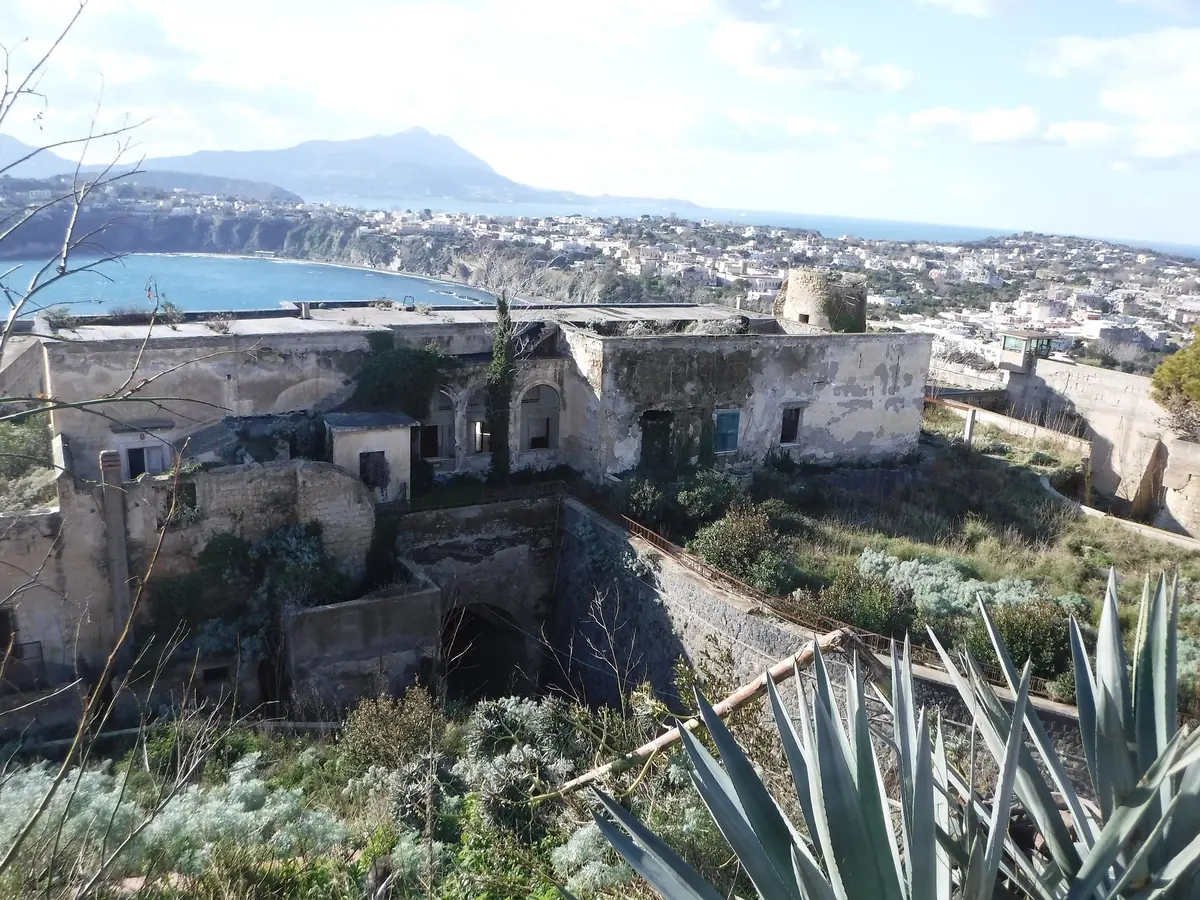
Palazzo d’Avalos is the former Bourbon prison, and it is the strongest visit on the island: cells with iron beds, the infirmary, the surgical room. You go in only on a guided visit by booking and you pay 13.00 EUR. The hours, though, are a problem: three different sources give three different calendars. Write or telephone before going up, because this is not a place to improvise.
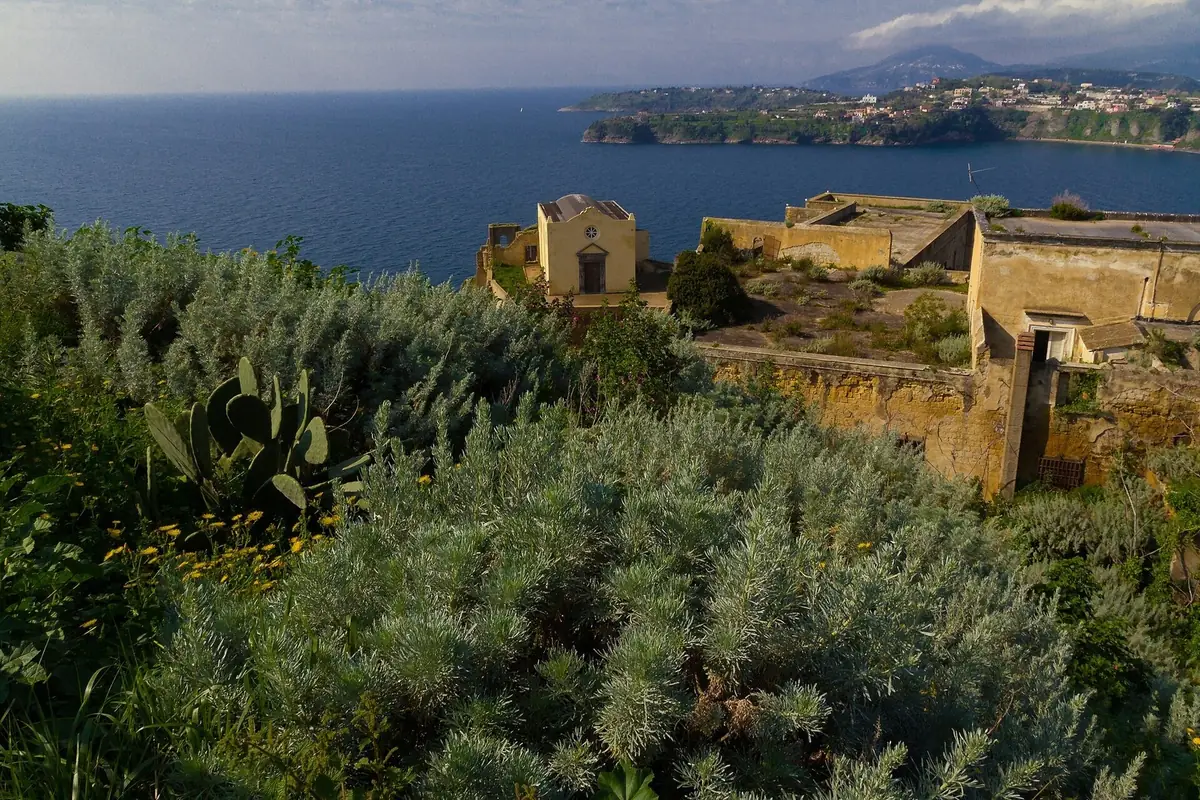
On the ridge lower down there is Santa Margherita Nuova, a church and former Dominican convent, today used for exhibitions, with the terraces from which the head-on view over the Corricella is taken. Here too: access to the interiors depends on the exhibition running, do not take it for granted.
The belvedere
The view is the reason most people come up, and there is nothing wrong with that. From the edge of the walls the Corricella is exactly below you, head on, and this is the only point on land from which you see it that way: from the quay, down below, that photograph cannot be taken.
Look in the opposite direction too. To the north-east the channel separates Procida from Monte di Procida and the mainland; to the west you see almost the whole of the low island, with the houses going down towards the Chiaiolella and, beyond, the outline of Ischia. On a clear day you understand the geography of the island in ten seconds, which from the harbour is impossible.
There are no railings everywhere and the edge is high: hold the children by the hand and do not climb on the low walls for a better photograph. The better photograph, in any case, is taken two steps back.
The best light is in the late afternoon, when the sun swings west and strikes the fronts of the village; in the middle of the day the contrast is too hard and the houses go flat. At dawn the village is lit but the belvedere is against the light: choose according to what you want to photograph.
Around the walls
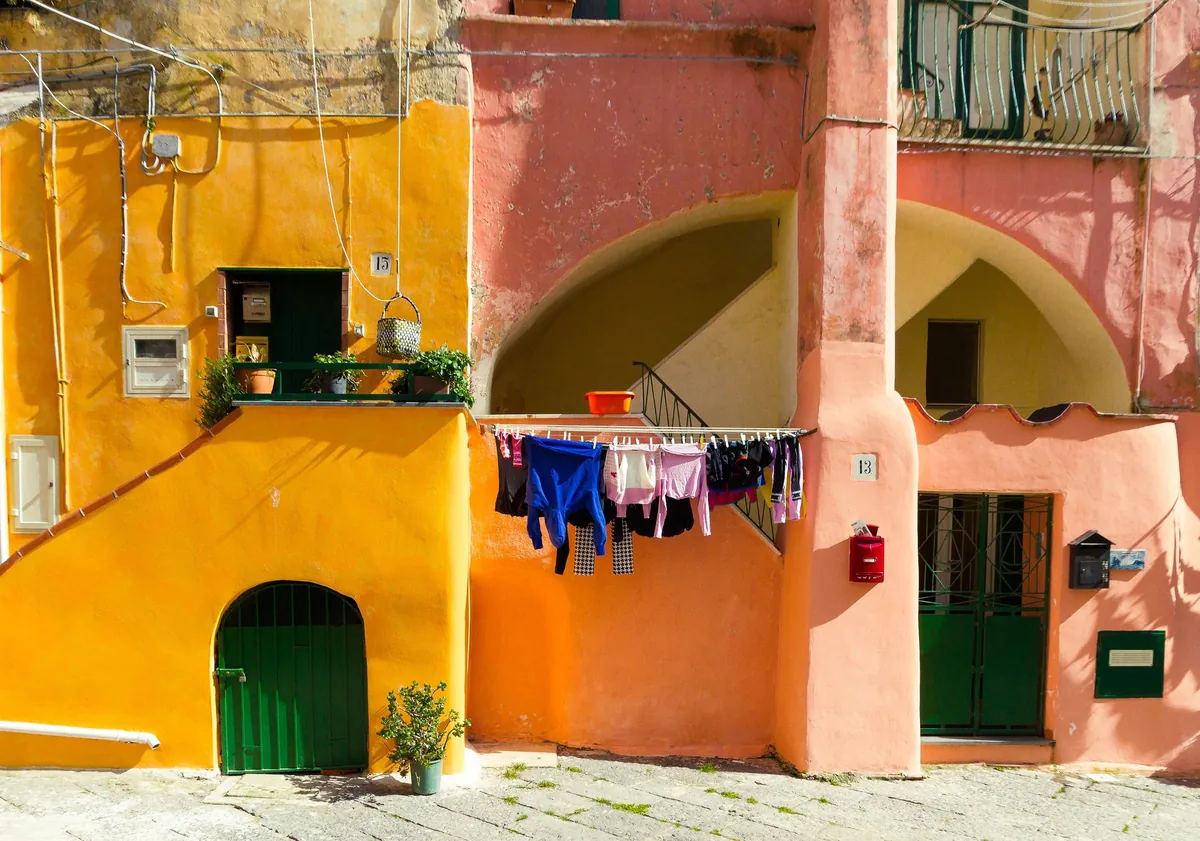
A little below Terra Murata is the Casale Vascello, the seventeenth-century courtyard settlement: the first nucleus born outside the walls, when the Saracen raids fell away and people came down. It is a lived-in court, not a monument: you look in silence and you do not go into the houses.
Up here there are no restaurants to recommend: you eat on the way down. The most obvious choice is the Corricella quay, ten minutes down, where the tables are on the water — Il Pescatore and the tables nearby are in the guide to the island’s restaurants. For the sea, the Chiaia beach is the nearest, at the bottom of a long stairway: the sources say 186 steps or 182, so count on about 180.