Early morning, always
Before 10:00 you find still water, cool sand and room everywhere. The mistral on the west coast typically comes in during the afternoon.
Ranking
This is not a beauty contest. The real difference here is made by the road, the steps, the wind and the shade that is not there.
Writes about beaches, boats and Vivara. Counts the steps, watches the wind, and says when a beach is wrong for you.
Updated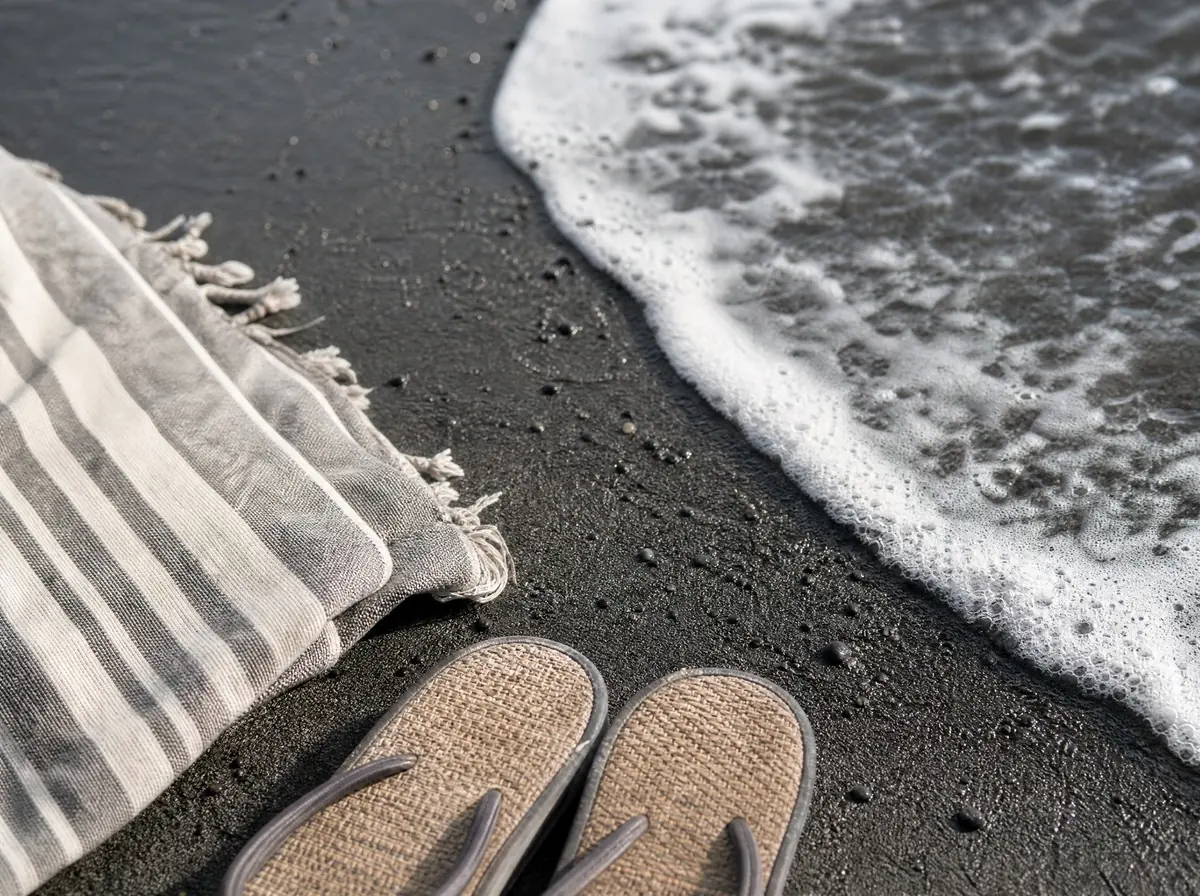
Reporter notebook
Before 10:00 you find still water, cool sand and room everywhere. The mistral on the west coast typically comes in during the afternoon.
1.20 EUR in a bar or tobacconist against 1.40 EUR on board. Buy two on the way out, so you are not stuck on the way back.
Natural shade is almost absent everywhere, there are no fountains on the sand and the volcanic bottom burns. Three ordinary things that count here.
There are no published price lists and no published bookings. You arrive, you ask the price and you decide on the spot.
Procida is 3.7 km² and has six beaches with a page of their own. They are all of dark volcanic sand except one, they are all free and none of them is far away: the problem is not choosing the finest, it is choosing the one that will stand up to the day you have in mind. With two small children and a cool box, a stairway of about 180 steps changes everything. With the afternoon mistral, an open shore becomes a sandblasting. If you have two hours before the hydrofoil, the fine beach on the other side of the island does not exist.
That is why the ranking that follows is built on four concrete criteria: access (road and bus against steps), shelter from the wind and the waves, facilities within reach of bare feet, exposure to sun and shade. Each entry also says who it is wrong for. And one preliminary point that applies to all of them: the beach clubs’ rates are not published anywhere, not on their own sites and not on the portals. You ask on the beach before you lie down, and the free stretch stays free everywhere.
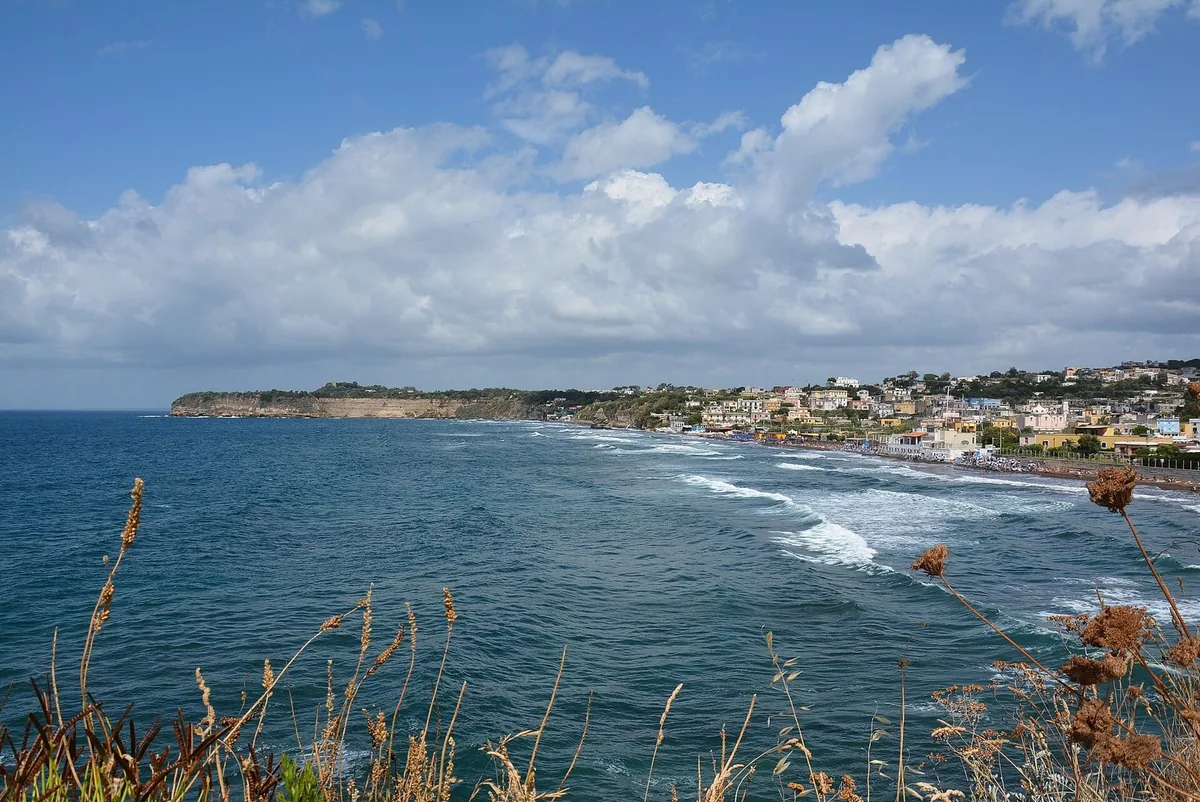
The beach that solves problems instead of creating them. It sits on the south-west coast, beside the Chiaiolella marina, between Punta Serra and the headland of Santa Margherita Vecchia: the only shore on the island where the road comes right up to the seafront and the L2 bus drops you a few metres from the sand. Shallow and safe water, dark volcanic sand, two tuff stacks separating it from the Ciraccio, the view over Vivara and Ischia in front. Behind you there are beach clubs, bars, pizzerias and restaurants: you have lunch and you are back in the water in three minutes.
Why it made the list: Access, facilities and a shallow bottom in the same place. Wrong if you are after silence: between 11:00 and 16:00, in high season, the seafront and the sand fill up, and natural shade there is none.
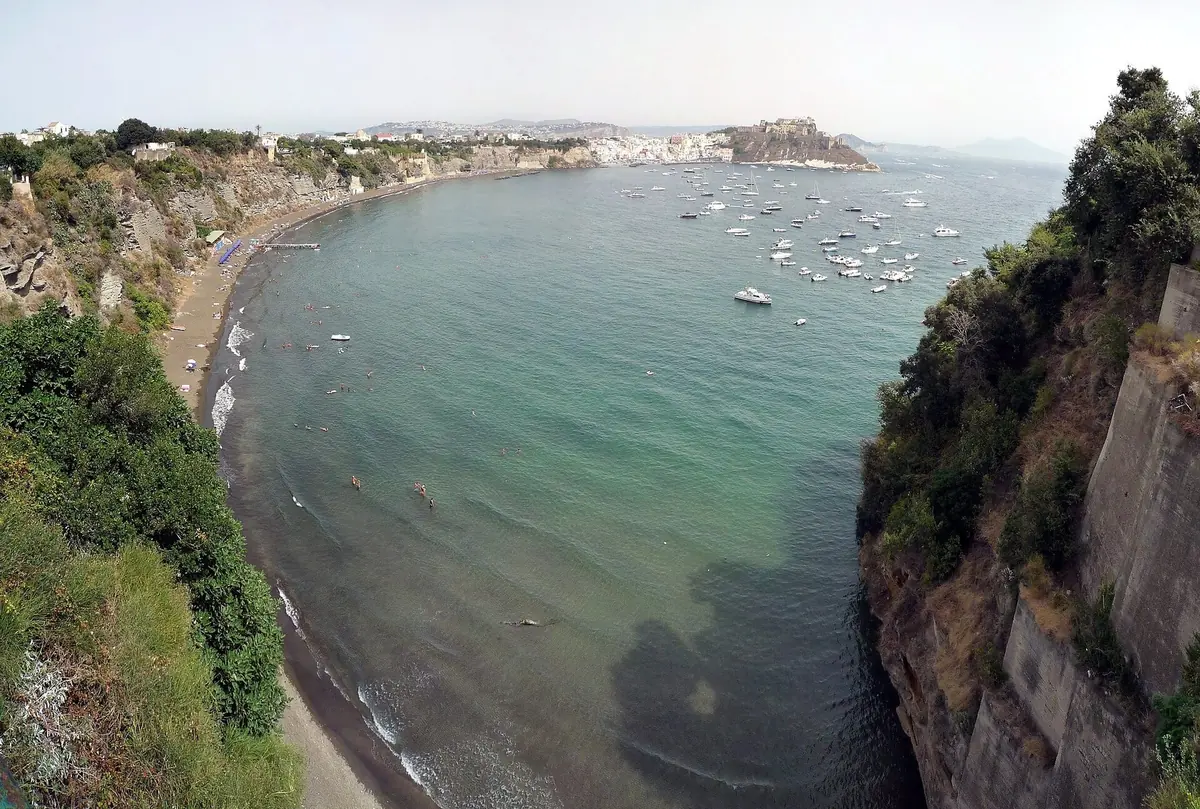
It is the most secluded and the most sheltered bay on the island, with water that stays shallow for a good many metres before it drops: the beach Procidans point to when the talk turns to children. The price is the access. No road reaches it: either you go down the stairway from Via dei Bagni, or you take Via Pizzaco from Piazza Olmo, or you arrive by sea. On the steps the sources argue — 182 for some, 186 for others — so count on about 180 and plan accordingly. For the most part it is free, with two small beach clubs, one of which doubles as a restaurant.
Why it made the list: Shelter and shallow water like nowhere else. Wrong with heavy luggage, with mobility problems or at 15:00 in August: the climb back up is the part people remember worst. In that case there is the boat service from the Corricella.
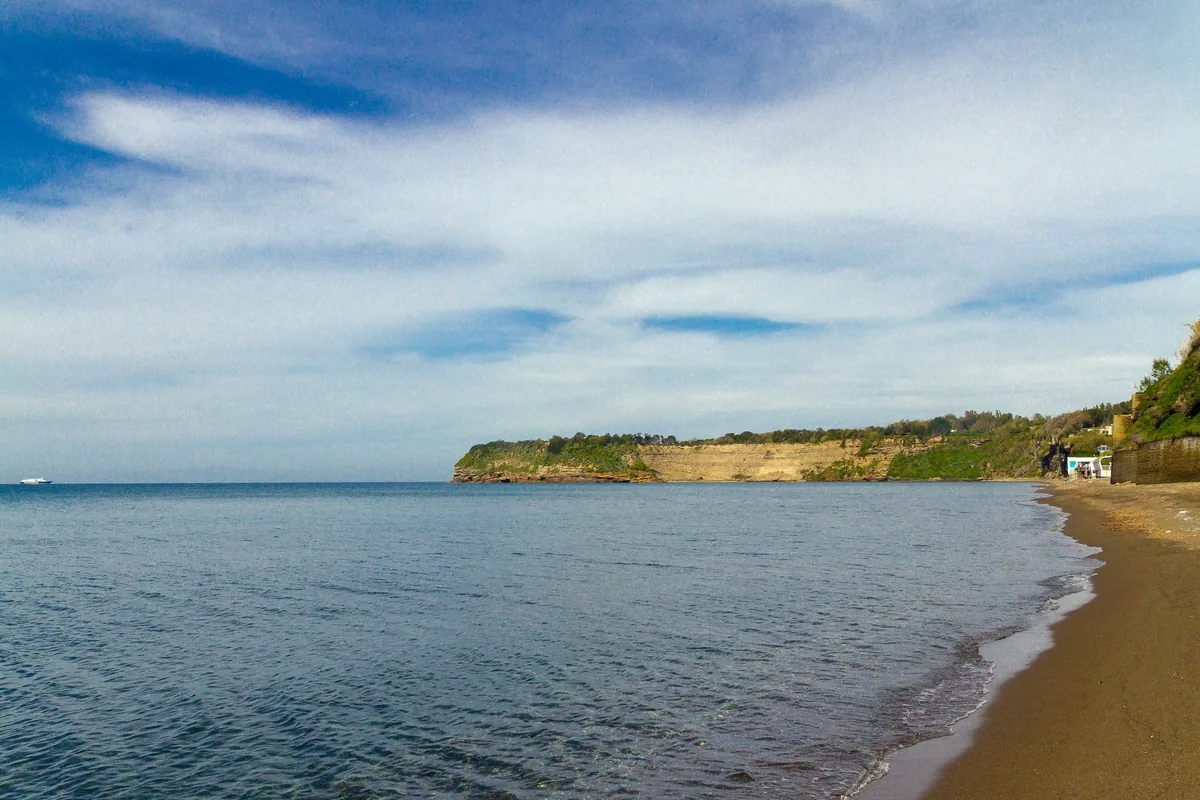
The long open shore of the west coast, north of the Chiaiolella and separated from it by the tuff stacks. It has the road and the L2 bus like its neighbour, but far more space and far fewer people: bathers concentrate near the accesses at Vicolo Ciraccio and Via Flavio Gioia, and five minutes walking along the water’s edge is enough to find room even in August. Free stretches and equipped stretches alternate. Note that the sources dispute the claim to length between the Ciraccio and the Chiaiolella: neither can claim it without naming who says so.
Why it made the list: The convenience of the road without the crush. Wrong on a windy afternoon: it takes the mistral in the face and the dark sand flies. No natural shade, so a parasol is not optional.
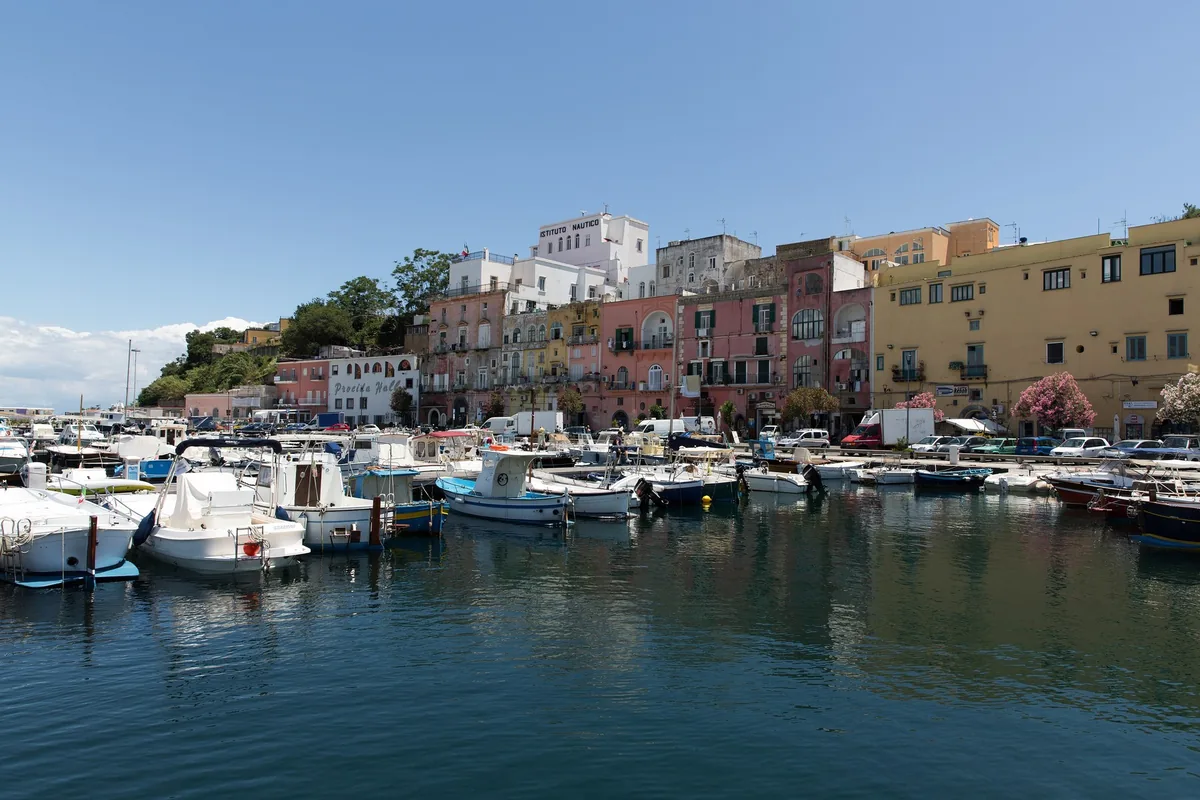
Immediately west of the harbour at Marina Grande, reached on foot from Via Roma with the quay behind you. It is the beach that solves two frequent situations: the half day just after landing and the two hours of waiting before the hydrofoil, when going to the other side of the island makes no sense. There is an equipped beach club with a bar-restaurant and a rock, “il cannone”, that the youngsters dive off. The sources list it as suitable for families with children.
Why it made the list: No other beach on the island is five minutes from the ferry quay. Wrong as the destination for a whole day: it is small, it sits beside the harbour and in the middle of the day in August it is full. The type of bottom is not described by any reliable source: take a mat.
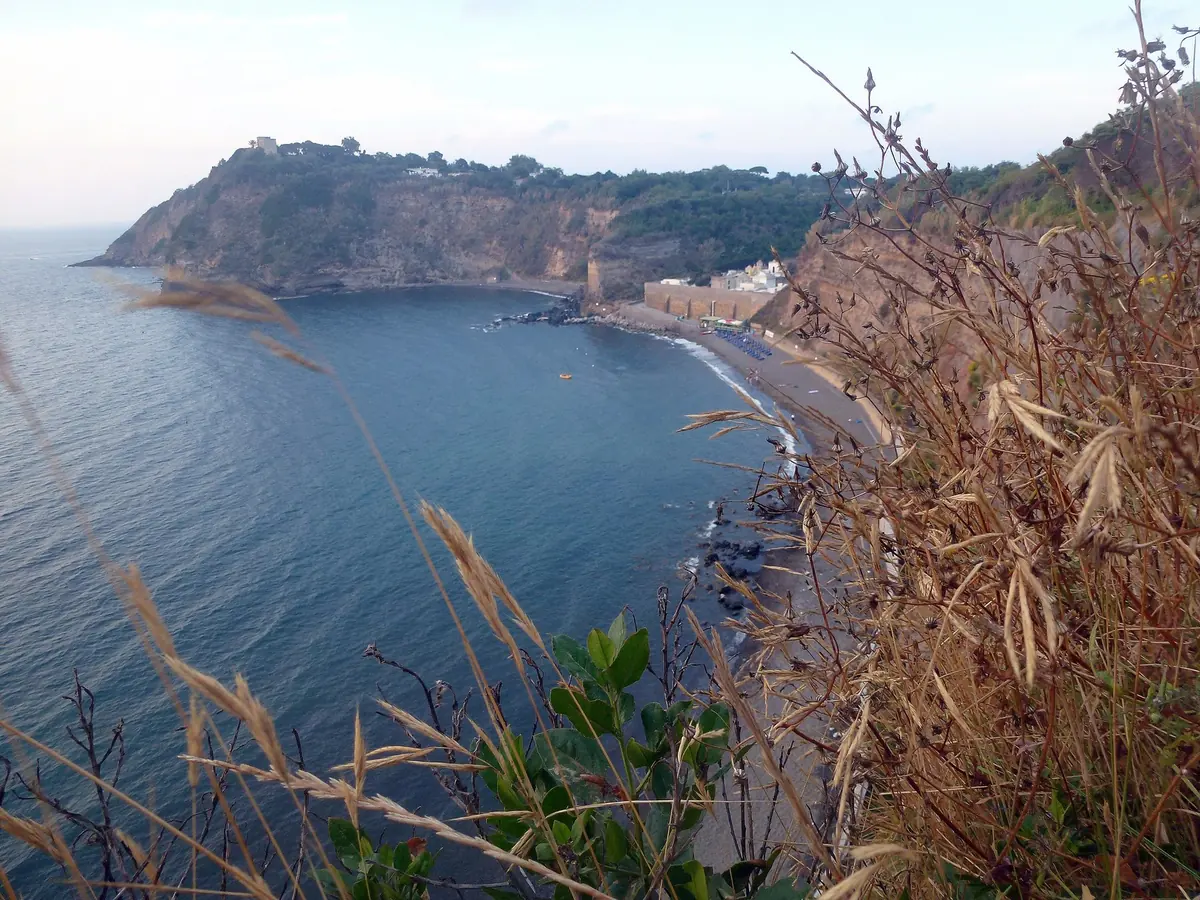
The small horseshoe bay below the cemetery, closed by Punta Serra to the south and Punta Ottimo to the north, where in 1994 Massimo Troisi — Mario Ruoppolo — recited Neruda’s poems. You go down from Via Cesare Battisti by a short but steep stairway, and the C1 bus runs exactly harbour–Pozzo Vecchio–harbour. Around it there is open country and a small bar; on the sand, which is very coarse, a single beach club operates. On the spot nothing has been laid on: the bay has stayed as it was, and that is all.
Why it made the list: It is a piece of cinema you can visit free, and it is at its best in the late afternoon. Wrong as a base for a whole day at the sea: small, uncovered, with almost no shade. Two or three hours, no more.
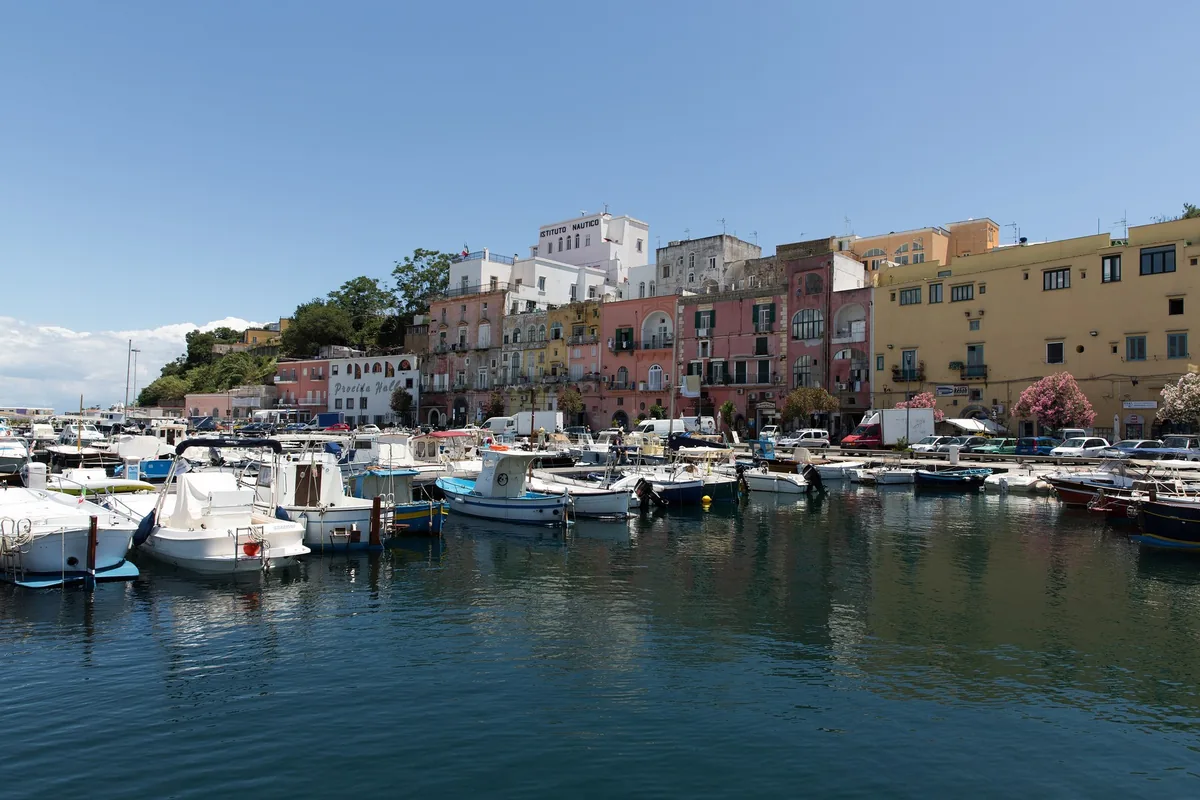
At the eastern end of the Marina Grande front, reached from the continuation of Via Roma or by a stairway from Via Bartolomeo Pagano. It is the only one on the island described as a pebble beach, although one source speaks instead of very coarse sand. It looks towards the mainland and Monte di Procida, and in the last hour of light the water and the coast opposite turn pink: that is why it is worth going down. Beside it is the spiaggia dell’Asino, which appears in L’isola di Arturo by Elsa Morante.
Why it made the list: An hour’s stop at sunset, two steps from the ferry. Wrong for almost everything else: no facilities, no shade, the harbour working alongside and a bottom that drops away at once, so much so that people spearfish there. With small children, choose something else.
| Rank | Name | Price | Walk from centre | Known for |
|---|---|---|---|---|
| 1 | Chiaiolella Beach | Free | L2 bus, road as far as the sand | Facilities and road access |
| 2 | Chiaia Beach | Free | About 180 steps, or the little boat from Corricella | The most sheltered bay |
| 3 | Ciraccio Beach | Free | L2 bus, direct road access | Space and length |
| 4 | Silurenza Beach | Free | Five minutes on foot from the quay | The swim before the ferry |
| 5 | Pozzo Vecchio Beach | Free | C1 bus, or twenty minutes on foot | The set of “Il Postino” |
| 6 | Lingua Beach | Free | A few minutes on foot from the harbour | Pebbles and sunset light |
If you are short of time, this is the short cut.
If instead you want to see them all without climbing a stairway, the answer is the sea: the island boat tour passes in front of all six and stops where no road reaches.
The wind. The Ciraccio and the Chiaiolella face west and take the mistral, which typically comes in during the afternoon. At the Ciraccio, where the shore is open and long, the sand starts to travel. The Chiaia is on the other side and is the most sheltered on the island: on windy days that is where people move to.
The shade. Do not count on it at any of the six. At the Ciraccio there is no natural shade, at the Pozzo Vecchio there is almost none, at the Chiaiolella the sun beats down all day. At the Chiaia the bay sits under a cliff, but no source states how much shade it makes and at what hour: do not trust it, bring a parasol.
The dark sand. It is volcanic, so it burns sooner and more than pale sand. Flip-flops really are needed, and that is not a detail with children.
The EAV buses all leave from Marina Grande, from the terminus near the church of Santa Maria della Pietà. For the sea you need two lines: the L2 for the Chiaiolella and the Ciraccio, the C1 for the Pozzo Vecchio. The ticket costs 1.20 EUR bought on land in a bar, tobacconist or newsagent, 1.40 EUR on board; we are not writing how long it stays valid because one source says 60 minutes and another 90. In summer the L1, the island’s spine, runs as often as every fifteen minutes; out of season, from October to May, the last service is around 21:00. The details are in the page on getting around Procida.
The car, in high season, is not a subject: from 30 March to 15 October 2026 non-residents’ vehicles may neither land nor circulate. The regional decree changes every year, so it has to be checked again in March, but the practical consequence stands: on the island you get about by bus, on foot or on hired two wheels.
The special case is the Chiaia. Anyone with heavy bags or little appetite for steps uses the boat service from Marina Corricella, which skips the stairway: times and fares are asked for on the quay, they are not to be found online. La Conchiglia, the restaurant on the sand at the Chiaia, works on the same principle: it arranges transport by sea, to be agreed when you book.
Let us repeat it because it is the most frequent question and the answer is an awkward one: no beach club on Procida publishes a price list. There are no official rates for parasols and sunbeds at the Chiaia, the Chiaiolella, the Ciraccio, the Pozzo Vecchio or the Silurenza. Anyone who gives you a precise figure online is estimating it. The price is asked for on the beach before you take your place, and it changes with the season and with the day.
It is worth adding that the beaches of Procida are for the most part free: even where there is a beach club, the public stretch exists and is used without paying. The Lingua has no identified beach clubs, and at the Pozzo Vecchio the single club occupies a small portion of the bay.
On accessibility one note only, and a cautious one: one source lists the Chiaiolella as equipped for people with reduced mobility, but it is an isolated source and not confirmed elsewhere. The Chiaia, with its stairway, is certainly ruled out.
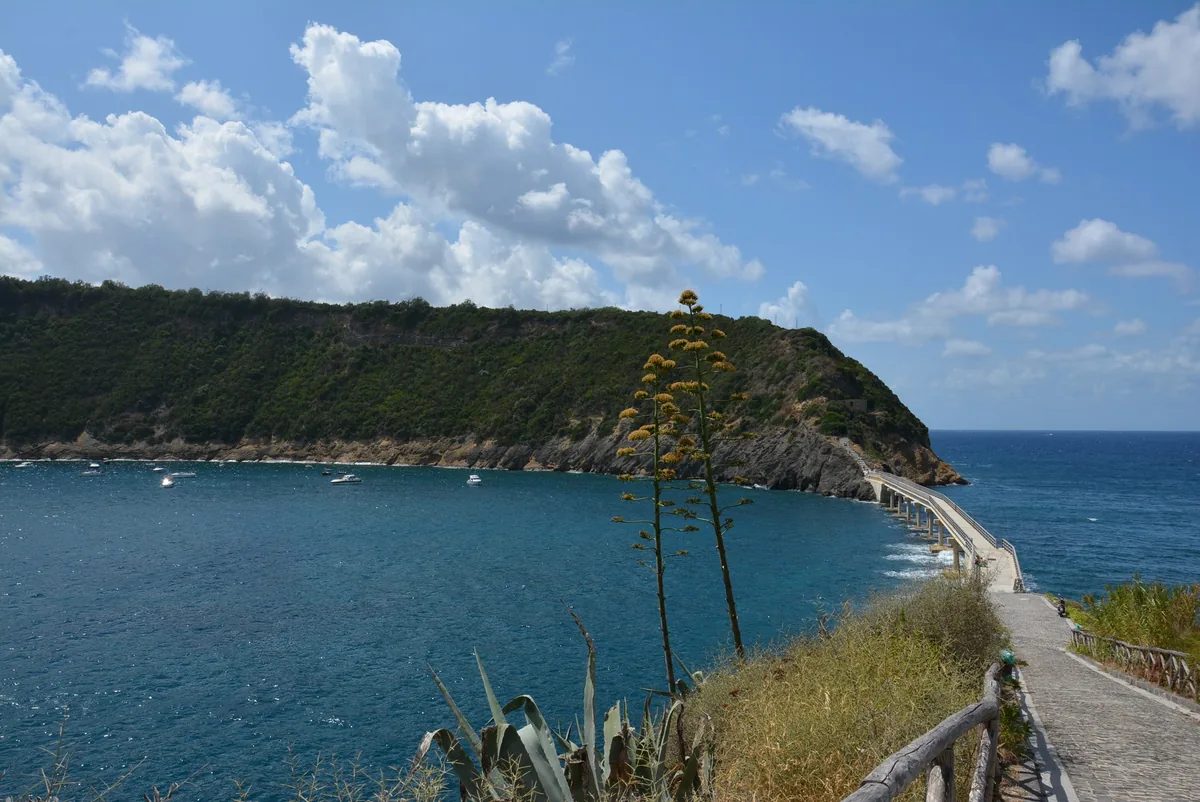
A full circuit of the island with swim stops and a guide on board in Italian, English and French. Changing rooms and showers are available at the lido you leave from.
✓ Verified GetYourGuide reviews
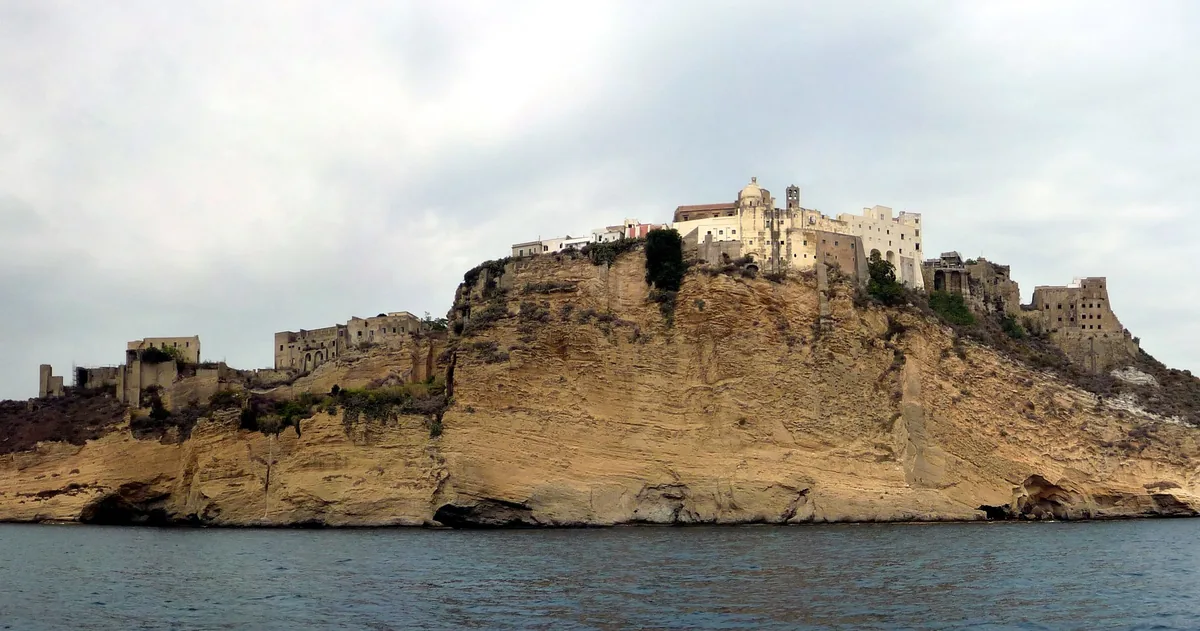
A two-hour circuit of the island, with several swim stops and snorkelling gear on board. Underwater photo and video is included in the price.
✓ Verified GetYourGuide reviews
Small groups, eight people at most
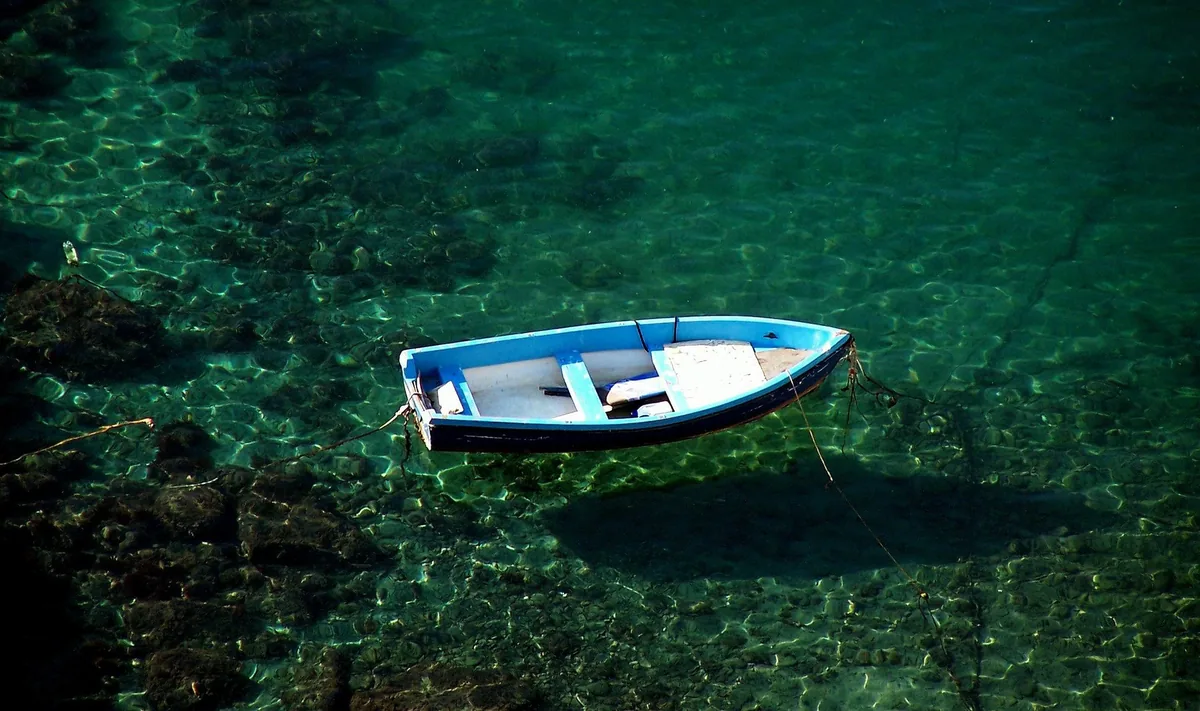
A six-metre boat for the whole day, no licence needed, with an awning, a shower and a fridge. You leave from and return to Corricella.
✓ Verified GetYourGuide reviews
It depends what you need. For shallow water and shelter it is the Chiaia, but it takes about 180 steps; for convenience and facilities it is the Chiaiolella, which has the road and the bus; for space it is the Ciraccio. Anyone who gives you a flat answer is selling something.
The Chiaia, for the water that stays shallow a long way out and for the shelter, if the steps are not a problem; otherwise the Chiaiolella, which has a shallow bottom, road access and facilities behind the sand. The Lingua, no: the bottom drops away at once.
It is not published. No beach club on the island shows a price list online, so the price is asked for on the beach before you take your place. The free stretch, present on every beach, stays free.
About 180. The sources disagree: 186 according to the island’s tourist portal, 182 according to two other local guides. As an alternative there is the boat service from Marina Corricella.
The Chiaiolella and the Ciraccio have direct road access, and the Silurenza is on Via Roma. But from 30 March to 15 October 2026 non-residents’ vehicles may not land on the island: in practice you use the L2 and C1 buses.
The Silurenza, five minutes on foot from Via Roma heading west. On the opposite side of the harbour front, a few minutes away, there is the Lingua. They are the two beaches to use if you come for the day.
Almost all of them are, of dark volcanic sand, often coarse. The exception is the Lingua, described as a pebble beach by most of the sources and as very coarse sand by another.
Yes, and it is the best way to understand them all in one go: the trip round the island by boat lasts about two hours, passes in front of every bay and stops where the road does not reach.
Further reading