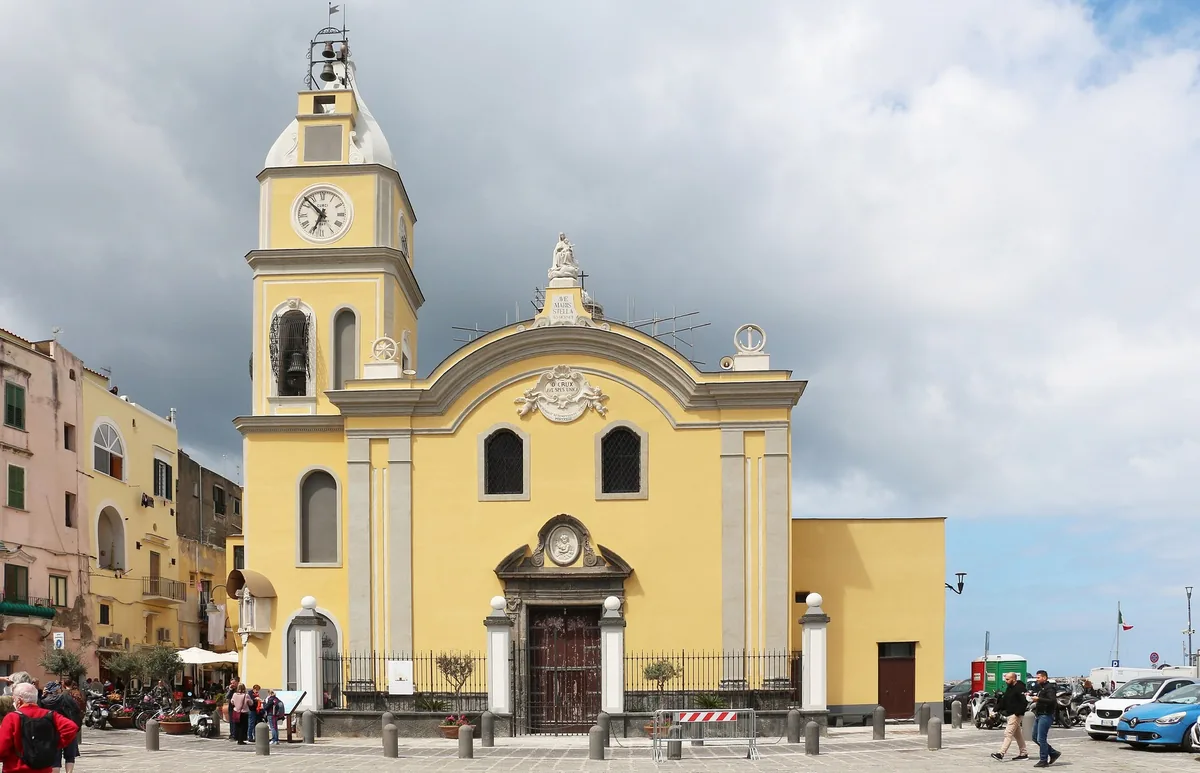
You see it before you land. As the ferry slows and the coloured houses come into focus, there is a bell tower sticking up above the harbour front, with a clock that has a face on every side. It is the first building on Procida you can make out from the sea, and it is built exactly for that.
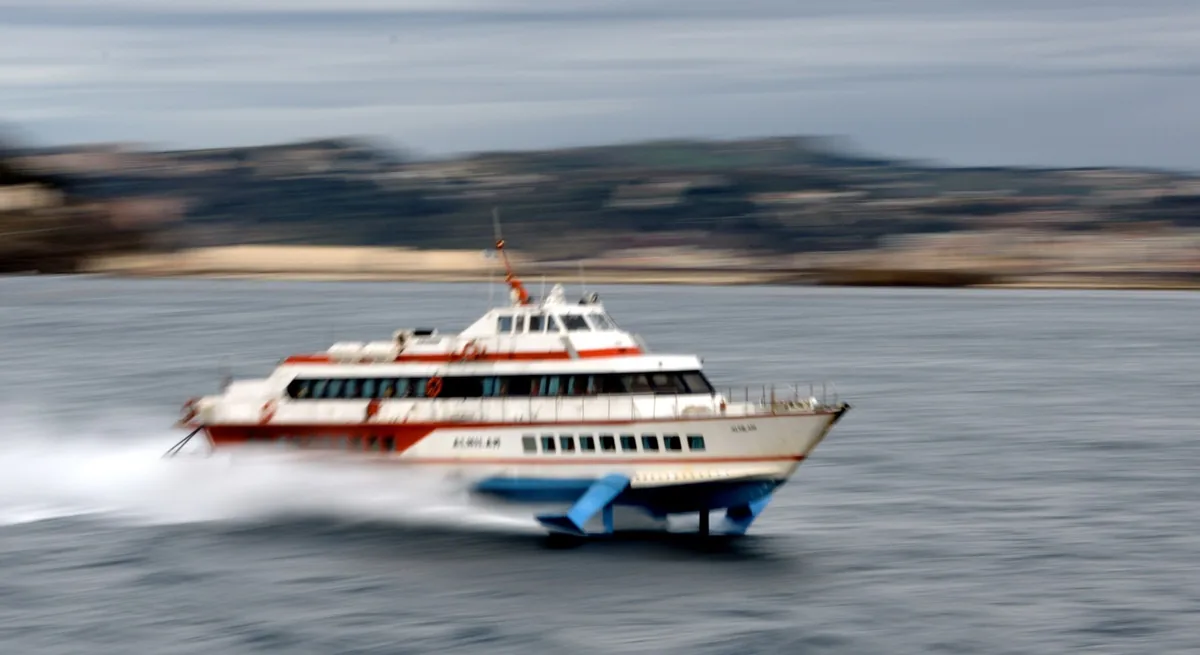
Santa Maria della Pietà is the sailors’ church, on the square at Marina Grande. In 1616 the shipowners of the Pio Monte dei Marinai asked the viceroy, the Duke of Osuna, for permission to build a chapel dedicated to Santa Maria della Pietà. It was completed in 1619. Since then everyone who leaves and everyone who comes back passes through here, and it is still true now, with hydrofoils instead of sailing boats.
A church built by shipowners
The detail that makes this church different from the others is who wanted it. Not a religious order, not a feudal lord: the shipowners. The Pio Monte dei Marinai was their mutual aid institution, and this chapel starts out as the place of the trade that on Procida made the town.
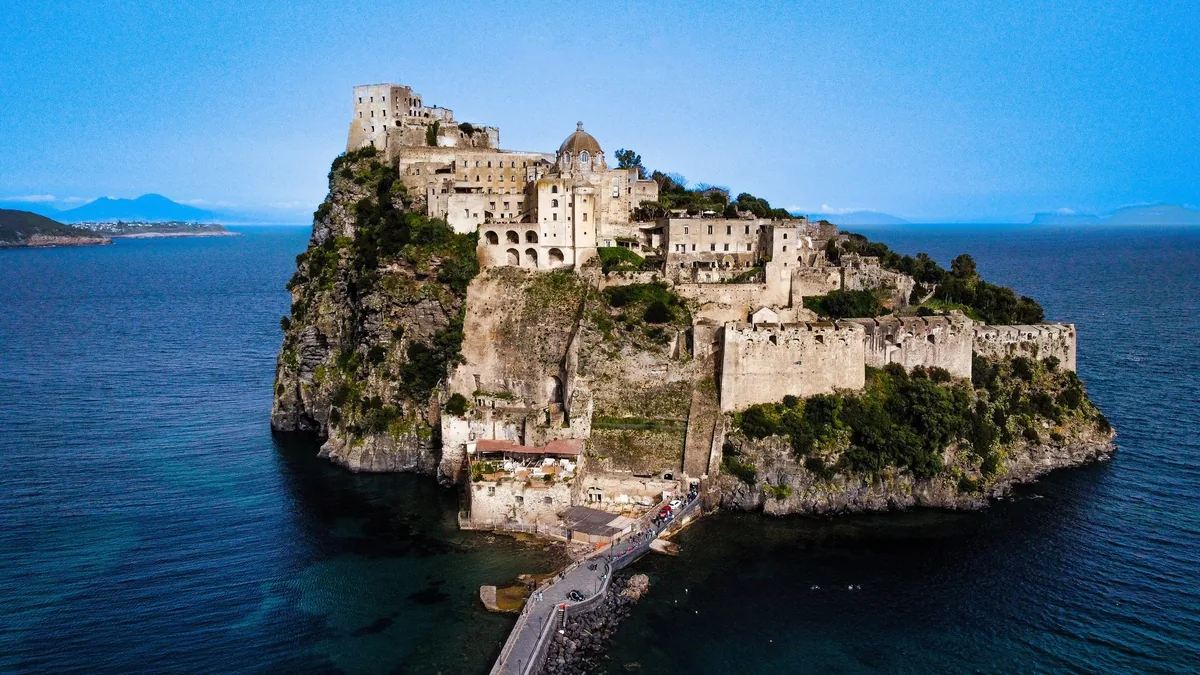
You can see it from the position as well. It stands on the water, not at the top, whereas the abbey of San Michele stands in the fortified village of Terra Murata, behind the walls. Two churches, two logics: one looks to the sea and to trade, the other to defence. The island reads clearly through that difference.
The original chapel is no longer there as they saw it in the seventeenth century. The building was enlarged at the end of that century and again towards 1760, and on that occasion the first chapel was absorbed into the sacristy. So what you visit is an eighteenth-century building containing a seventeenth-century one.
What to look at inside
The plan is a single nave with a barrel vault, two shallow side chapels on each side, a transept and an apse. Above the crossing there is a dome on a slender drum, with eighteenth-century stucco work: put your head back as soon as you go in, because from outside that dome does not read.
There are three objects to look for and they all carry a date. Two canvases of 1722 by Antonio Fumo. The wooden pulpit of 1744-45, by the cabinetmaker Agostino Fucito — look at the carving close up, it is serious craftsmanship. And the high altar, of about 1766, by Antonio Di Lucca.
Outside, the baroque bell tower with the four-faced clock is the piece you will remember, not least because it is the one you have already photographed from the boat without knowing it. A clock that can be read from every side, in a harbour, is not decoration: it is a working instrument.
The church and the harbour
Look at it from the square, turning your back on it for a moment to take in the harbour front. The church is wedged into the run of coloured houses, with no forecourt and no space in front: on Procida there was no ground to waste, not even for a facade.
That explains why the bell tower is tall and the church is not. The volume that had to be seen from the sea was the tower with the clock; the rest could stay up against the neighbouring buildings. It is not a design fault, it is economy of space applied to sacred architecture.
The bell tower also served to mark out the work. In a harbour of shipowners and fishermen the departures, the shifts and the tides were counted in strokes of the bell, and the four faces of the clock meant the time could be read from any point on the quay. Today people look at their phone, but the mechanism is still there.
Hours and good manners
Entry is free. On the hours a clarification is needed: the sources that circulate give 9:00-20:00, but they do not come from the parish, so treat them as indicative. There are no visits during services, and this is a working church, not a museum: masses, weddings and funerals take precedence.
The practical rule is simple: it is two steps from the quay, so go past and try. If it is open, you go in; if there is a service, you come back later or on the way out. It is not worth building a plan around it.
Covered shoulders, low voices, no flash photographs during services. If somebody is at prayer, give them a wide berth. These are obvious things that in high season, on the harbour front, you often see forgotten.
How long you need
A quarter of an hour. It is not a monumental church and it does not claim to be one: it is a fine harbour church, with three or four notable things inside and a bell tower worth looking at calmly from outside.
Said honestly: if you have only one day on the island and you have to cut something, this is the first thing you can cut. Not because it is ugly, but because Terra Murata, the Corricella and the sea to the west give you more in exchange for the time they ask. The difference is that this church does not cost you a detour: you come across it on the route anyway.
That makes it perfect at two moments. Just off the boat, while you are deciding how to get about and waiting for the quay to empty. Or at the end, when you have already given the scooter back and you have twenty minutes left before the hydrofoil. On the practical information page you will find the other things that work well in those gaps.
What is around it
You are on the harbour square, so you have everything within walking distance. Via Roma runs along the water with the old bars and the ticket offices; to the west, a few minutes away, is the Silurenza beach, the handiest on the island; at the opposite end the Lingua beach, tiny, good for the sunset and not much else.
To eat, the most Procidan choice is to go down to the quay at Corricella, ten minutes of stairway, where the tables are on the water: La Lampara is the classic reference point, and the rest is in the restaurant guide. If you have a single day, the sensible order of things is in the one-day itinerary.