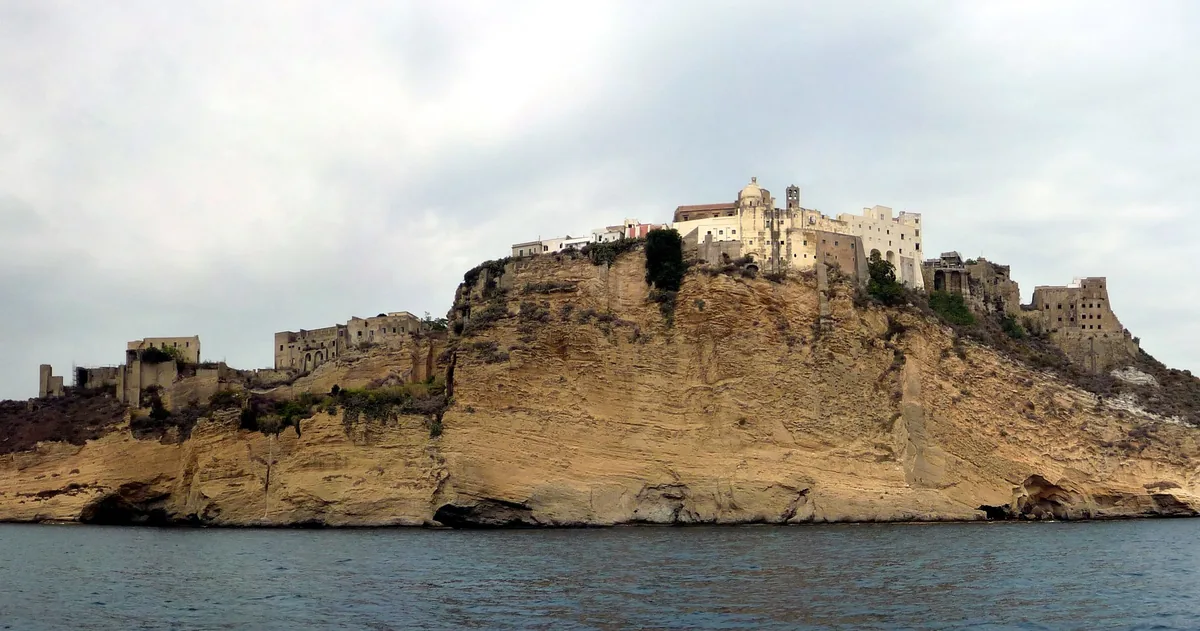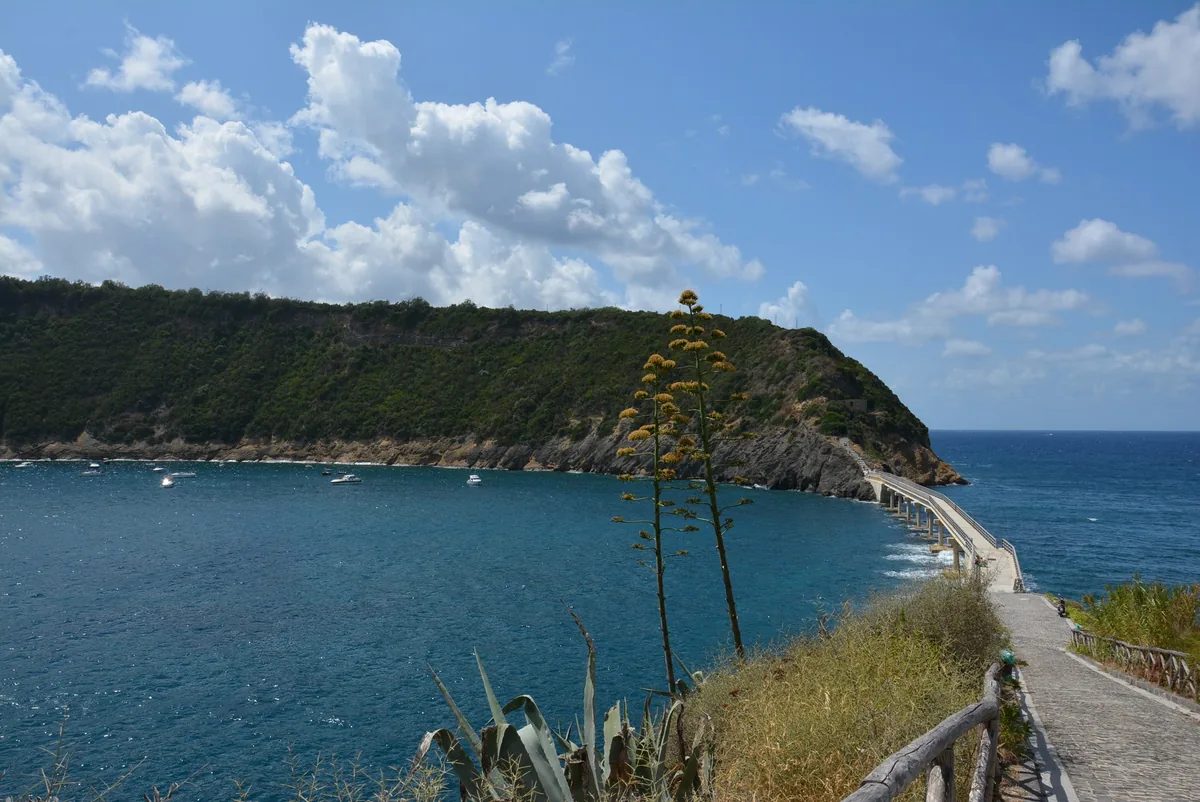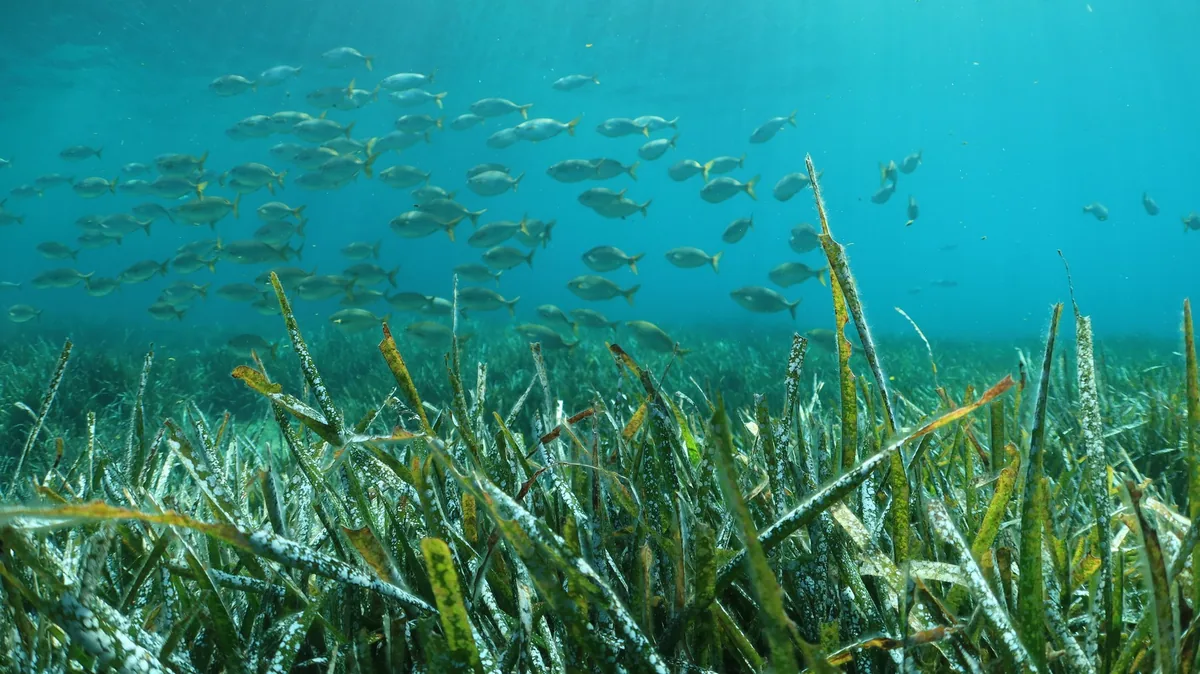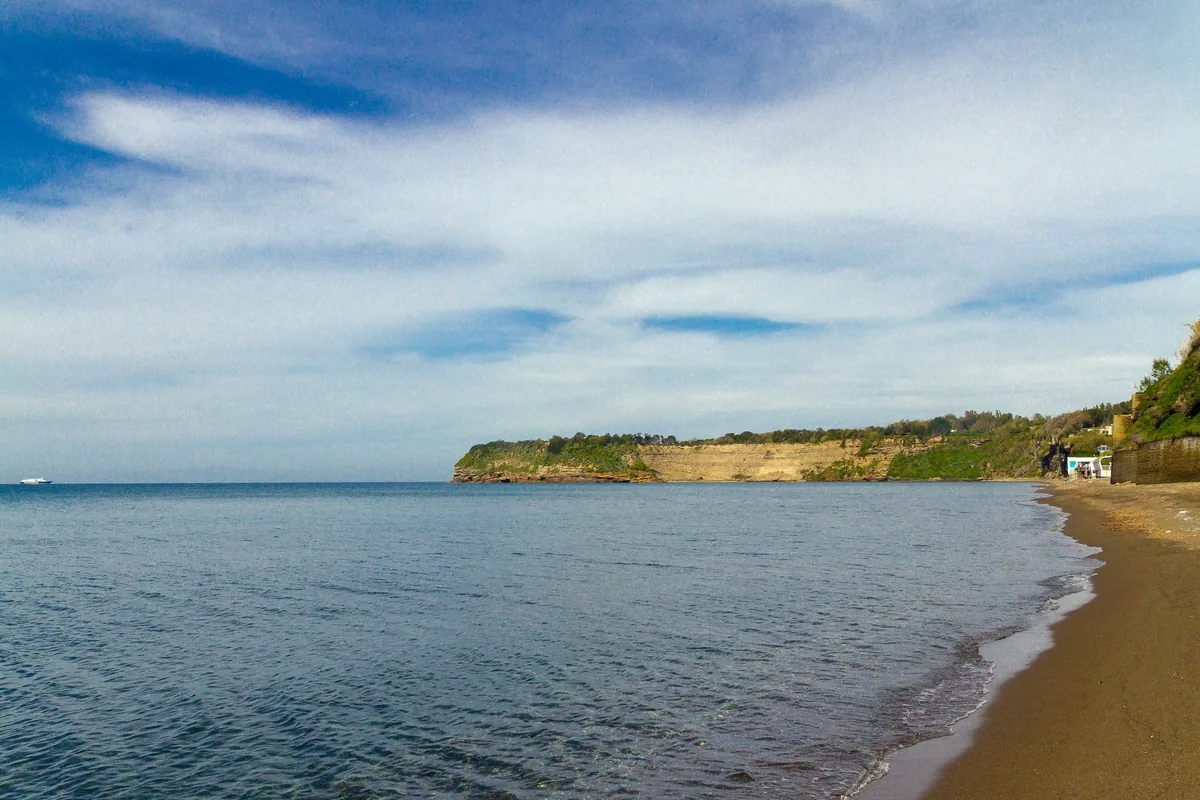
The Ciraccio is the long stretch of sand on the west coast, the one where you find room even on Ferragosto if you walk a bit. It is north of the Chiaiolella, on the same side, and the two tuff faraglioni, the rock stacks, separate it from the busier stretch. The road reaches it, the bus reaches it, and that is the first thing to know. The second is the wind: in the afternoon the mistral gets up and the sand starts to fly. People who come for the first time notice it at 15:00, when the towel turns into sandpaper. People who live here know it and organise the day the other way round.
How you get there: road and bus, no stairways
The Ciraccio has direct road access. You go down from Vicolo Ciraccio or from Via Flavio Gioia, which you take from Piazza Olmo, and the beach is right there: no long stairway, no exposed path, no boat to catch. It is an enormous difference from the Chiaia, where the road does not reach at all.
The bus is the L2 line from Marina Grande, the same one that serves the Chiaiolella; the L1 does the ridge. A ticket is 1.20 EUR if you buy it on the ground, 1.40 EUR on board. We are not giving you how long the ticket is valid for, because the sources move between 60 and 90 minutes and there is no official figure we can cite. In summer the services are frequent, out of season the last bus is around 21:00: if you stay until sunset in October, check the time of the last one back before you stretch out in the sun. The whole picture is on the page about getting around Procida.
The length of the sands means that the point where you come in counts for a good deal: the further you get from the accesses, the fewer people you find. It is the beach where walking five minutes buys you an extra square metre of space each.
The afternoon mistral: the thing to know
The Ciraccio is open and faces west. It takes sun all day — there is no natural shade, not even a cliff that covers it at a certain hour — and it is exposed to the mistral in the afternoon. When the wind comes in, the dark volcanic sand lifts and sticks to you. It is not a tragedy, but it changes the day: the parasols bend, the book cannot be read, the children get fed up.
How you organise around it
The morning is the good moment: a stiller sea, clean air, sand that stays where it is. If the wind comes in and you do not feel like fighting it, the right move is to shift to the other side: the Chiaia is the most sheltered bay on the island and it almost always answers well when it is blowing here. The alternative is to go down to the Chiaiolella marina and sit at a table.
The good side of it: with the right wind, this is the stretch of coast where you see people surfing. And the sunset over the open sea, from here, needs no adjectives.
Sand, water and how much room there is
Dark volcanic sand, as on almost all the island, which burns by the middle of the day: flip-flops are not an affectation. The water goes in gently and stays usable for children, with the warning that here the swell, with the wind, is felt more than at the Chiaiolella or the Chiaia.
On the claim to be the longest
Two island guides describe the Ciraccio as the longest stretch of sand on Procida; the local tourist portal gives that record to the Chiaiolella instead. There is no published measurement and the two beaches are in fact a single sandy front interrupted by the faraglioni. We would rather tell you that the sources disagree than write a superlative we cannot support. What you can take as certain is that there is room here, and that it is the right place when the Chiaiolella is full.
Free stretches, serviced stretches and unpublished prices
The Ciraccio alternates free stretches and serviced ones. You can arrive with a towel and spend nothing, or take a parasol and sunbeds where the service exists. The prices are not published: for 2026 no operator at the Ciraccio puts out a price list, neither on their own channels nor on the portals. You ask on the spot before you settle in. If somebody online gives you a precise figure, they are making it up.
There are fewer facilities behind the beach than at the Chiaiolella: for lunch, the marina seafront remains the reference point, with addresses like Da Girone. It is a beach where it pays to arrive with the water already bought.
If you want to see this piece of coast from the other side, the boat trips round the island run along the whole western side and stop to swim where you cannot get to from land.
Who the Ciraccio suits
You go if: you want room, you do not want to do stairs, you are arriving by bus, you move about in the morning, or you are after the sunset over the open sea without getting away from the Chiaiolella’s facilities.
Change beach if: the wind has already come in, you are after completely still water for a very small child, or you want natural shade — there is none here. In those cases the Chiaia is the better choice, provided you accept its roughly 180 steps.
Anyone with a single day usually puts the Ciraccio and the Chiaiolella together: they are next to each other, you go from one to the other on foot, and you make the comparison with your own eyes. Our guide to the island’s beaches puts all six beaches side by side, with their accesses and their limits.