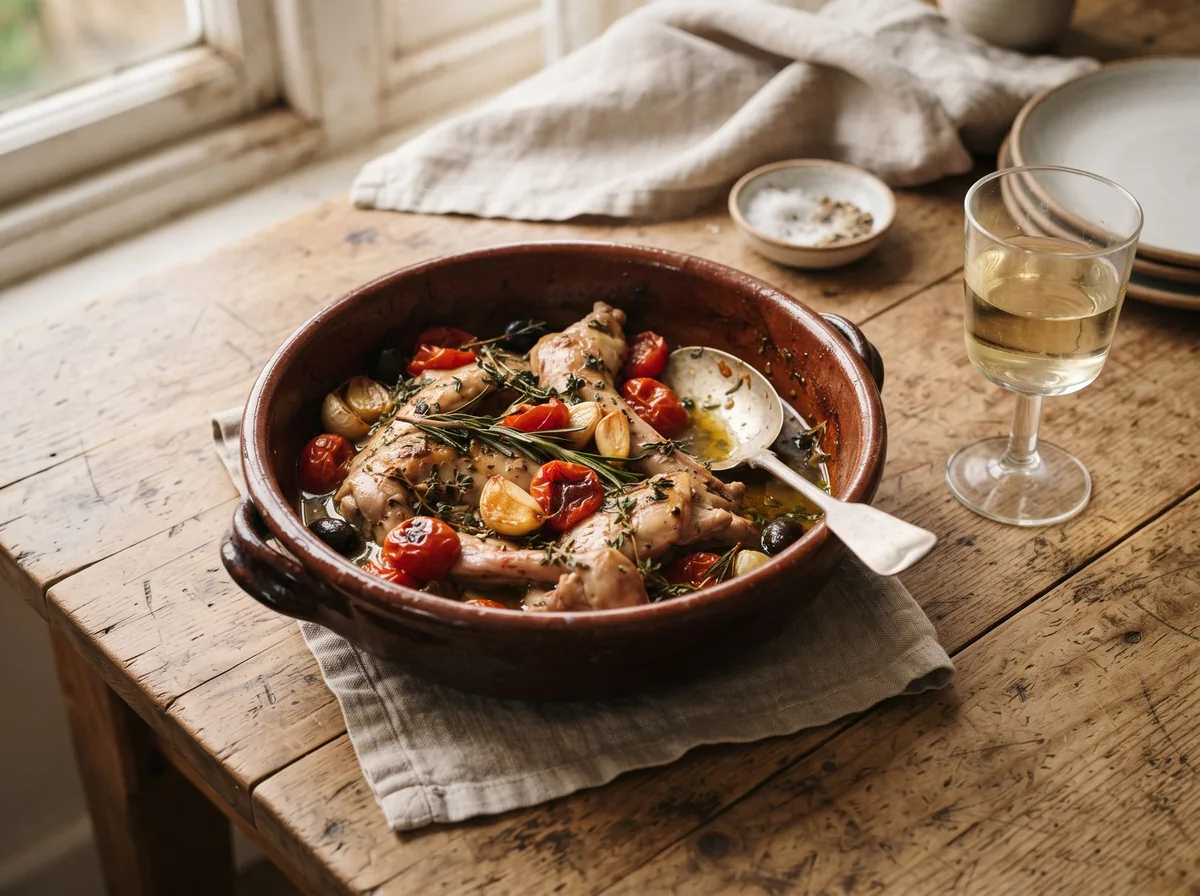

This is the dish that contradicts the idea of Procida as an island of nothing but fish. Rabbit, rosemary, cherry tomatoes, a terracotta pot and two hours over a low flame. It arrives dry, aromatic, with very little cooking juice in the bottom of the plate. If you were expecting it in a sea of sauce, you have another island in mind: that one is Ischia, and it is a different recipe.
How it is made
The ideal rabbit is small, under 1.2 kg: any bigger and the meat loses its fineness and the slow cooking dries it out too much. It is cut into pieces and browned in oil with the garlic. Then white wine, fresh or dried cherry tomatoes, rosemary, salt.
The cooking is done in a terracotta pot, covered, over a low flame. This is not folklore: terracotta heats evenly and slowly, and it lets the liquid reduce without the meat burning on the bottom. The result should be meat that comes away but does not fall apart, with the cherry tomatoes almost collapsed and a concentrated cooking juice, not an abundant one.
Rosemary is the dominant herb and it has to go in in serious quantity. It is the aromatic signature of the dish: anyone making it with basil or oregano is making something else.
It is not coniglio all’ischitana
This is the part that earns the page, because the two recipes get confused constantly, on menus included.
| Alla procidana | All’ischitana | |
|---|---|---|
| Texture | Dry, little sauce | Plenty of sauce |
| Aromatics | Rosemary dominant, cherry tomato | Tomato, basil, garlic |
| How it is served | A main course, in the pot | The sauce dresses bucatini as a first course, then the meat |
The Ischia version deliberately produces a lot of liquid, because that liquid is the dressing for a first course: you eat the bucatini with the rabbit sauce first, then the meat. The Procida one does not. It is conceived as a single meat dish, drier and more aromatic, and it does not generate a first course.
They are two related but distinct recipes. If you read “coniglio all’ischitana” on a menu in Procida, you are reading the recipe of Ischia, not that of the island you are on.
Where it comes from
The origin lies in household economics. Rabbits were reared at home, in pits dug into the tuff, and needed no pasture and no good land: on an island of less than 4 km² with small kitchen gardens it was the most sensible meat to have.
The sources also connect the tradition to hunting, and in particular to the Bourbon shooting parties on the islet of Vivara, which was a hunting reserve. It is a connection reported by the local literature: take it as historical context, not as a notarised document.
It was a winter and feast-day dish, not an everyday one: meat cost money, and a Sunday or an anniversary justified the long fire. Today you will find it on the menu all year where they decide to keep it, which is fewer places than you would imagine.
The rabbit “a fossa”, and why it matters
Procidan domestic rearing was done in pits dug into the tuff ground, covered over, where the animals lived and dug their own tunnels. It is a system found across the Phlegraean archipelago and on Ischia, and it is not folklore: it answers a real problem.
The problem is space. On a small, dense island there was no land to give over to pasture, and hutches above ground stole square metres from the kitchen garden. The pit, by contrast, sits underneath and takes nothing away. On top of that the tuff holds a steady temperature, which counts for a good deal in summer.
The gastronomic consequence is that the animal grew slowly and stayed small: hence the instruction to stay under 1.2 kg, which today looks like a recipe-book obsession and at the time was simply what you had. The meat of a small rabbit stands up to long cooking in terracotta without drying out completely.
Today the rabbit reared in pits is not a documented commercial supply chain on the island. What you eat in a restaurant almost certainly comes from an ordinary farm: that is not a fault, it is just a fact to bear in mind when somebody tells you otherwise.
How to order it and not go without
Procida is an island of fish kitchens. The rabbit is there, but you have to look for it, and in many cases it is prepared to order because the cooking is long: ringing the day before is not fussiness, it is the only way to be sure.
If you are after an alternative to fish in any case, the island’s most solid address for meat is Re Ferdinando at Marina Grande, running since 1960, steakhouse and fish together: it is the one real break in the local fish monoculture. For the traditional harbour kitchens, La Medusa works off the day’s market, which means the menu changes and it is worth asking.
Do not trust the photographs on the menus displayed outside. Ask two things: whether the rabbit is made in house, and whether it is dry or in sauce. The answer tells you straight away which of the two islands you have on your plate.
What to drink with it
This is not a dish for a big red: the rosemary and the cherry tomato ask for acidity and freshness, not tannin. A still white from the bay works better. On the island you can try Starza wine, a falanghina-based white made with Procida grapes, which however has a tiny production and is not everywhere.
Side dish: seasonal vegetables, or the artichoke in oil if they have it. Bread is useful, but not much of it: there is less sauce to mop up than you think.