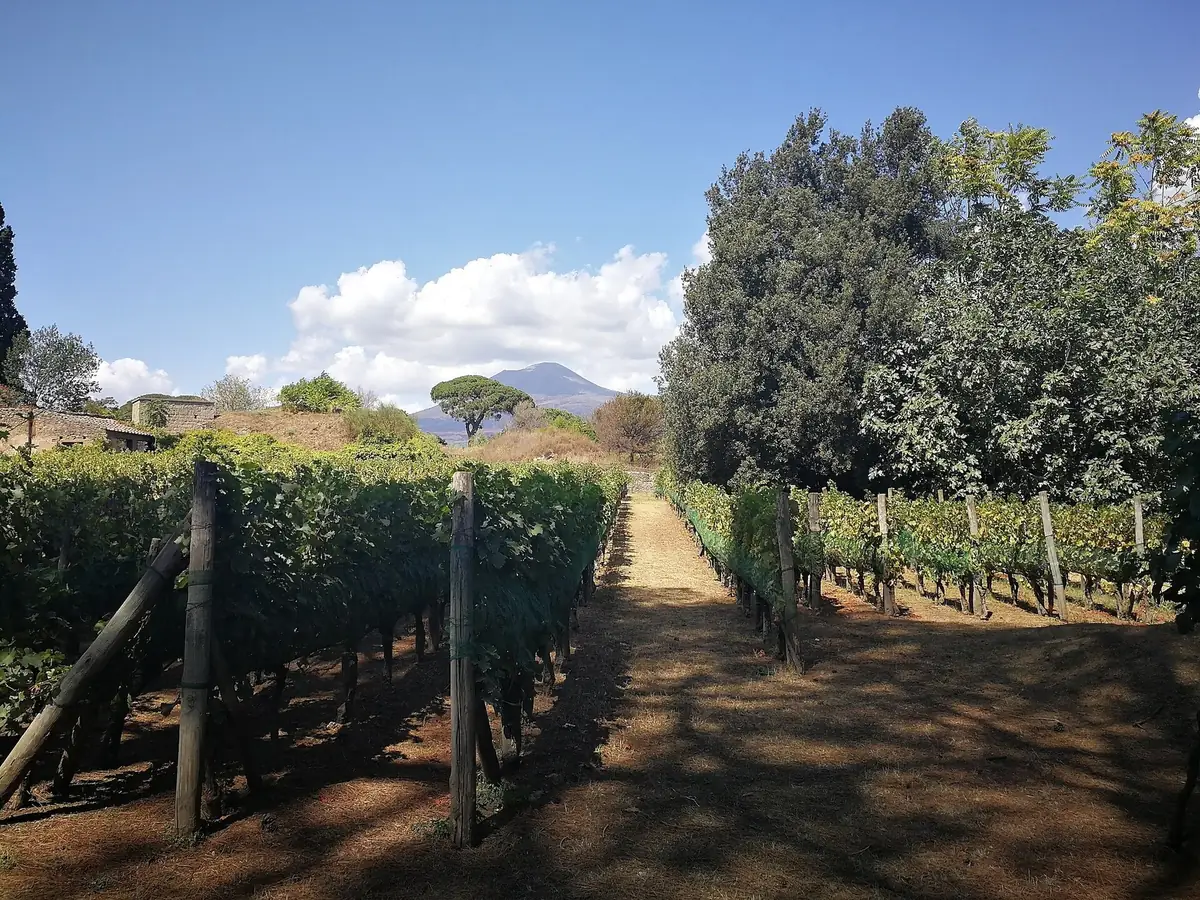

For centuries the wine of Procida was sold loose, with no label and no name, and most of the local grape — the levante — ended up on market stalls as a table grape rather than in a cellar. Starza breaks that habit: presented in 2022, the year Procida was Italian Capital of Culture, it is the first wine with a denomination made from island grapes. The thing almost nobody says should be said straight away: the denomination is DOC Campi Flegrei. A DOC Procida does not exist.
What kind of wine it is
It is a white. The blend is 90% falanghina dei Campi Flegrei and 10% levante, a local native grape. The name comes from Starza, a spot on the island planted with vines — according to the account the sources report — since the days of the Saracen raids.
The producer is Biagio Lubrano Lavadera. The project involved the oenologist Andrea D’Ambra, of Casa D’Ambra on Ischia, and the wine is made at the Farro winery in Bacoli, on the Phlegraean mainland.
On tasting notes, alcohol content, vintages and prices I have no published data I can verify, so you will not find any here. If you read very detailed descriptions of this wine’s character elsewhere, check who has signed them.
Why the DOC is Campi Flegrei and not Procida
This is the part that causes the most confusion, so let us make it clear.
A denominazione di origine controllata exists only if somebody has established it, with a set of production rules, a defined area and a protection consortium. For Procida one has never been established. The DOC Campi Flegrei, by contrast, covers the Phlegraean volcanic area, and Procida falls within it both geologically and administratively: the island is part of the Phlegraean archipelago.
So the correct form of words is: a DOC Campi Flegrei wine made with grapes grown on Procida. Not “DOC Procida”, which does not exist, and not “wine of Procida” either, as though that were a protected denomination. The same distinction applies to the island’s lemon, entered on the P.A.T. list but with neither DOP nor IGP: here the names matter, and legal protection is a different thing from tradition.
Viticulture on less than 4 km²
Calling it heroic viticulture is not press-release emphasis: Procida has less than 4 km² of surface, densely inhabited, with small terraces, walled kitchen gardens and no possibility of serious mechanisation. The vineyard competes with the houses, with the lemons and with the artichokes for the same square metres.
The farming history helps you understand why an island wine had never appeared before. The levante was and largely still is sold as a table grape, which pays straight away and needs no cellar; wine stayed a domestic production, sold loose to the neighbours. It took an outside project, with an oenologist and a winery on the mainland, to arrive at a bottle with a label on it.
The practical consequence is that the numbers are small. Do not expect to find it on every wine list on the island.
Why it only arrives in 2022
2022 is the year Procida was Italian Capital of Culture, and the wine was presented in that setting. The coincidence is not accidental: a project like this needs attention, investment and a reason to exist at a particular moment.
Before that there was no push to bottle anything. Vines have always been on the island, but wine stayed a domestic affair: it was sold loose, to neighbours and to the bars, with no label and no controls. And the levante grape had a better market fresh — on the stalls, as a table grape — than in a cellar.
Getting to a bottle took three things the island did not have: an oenologist, an equipped winery and a denomination to lean on. The first two came from outside, from Ischia and from Bacoli; the third already existed, and it is the one for the Campi Flegrei.
The result is a wine that tells you a lot about the scale of things here: a few hectares, a few bottles, and an operation that would have been unthinkable without the mainland two miles away.
Where to drink it, and what to do if there is none
Its availability on restaurant wine lists is not documented reliably, and I am not giving you a list I cannot verify. The advice is to ask for it directly: in the more established harbour kitchens, like Re Ferdinando or La Medusa, the question makes sense; in the places at Corricella such as Caracalè it does too.
If there is none, the obvious substitute is another falanghina dei Campi Flegrei, which is after all the same grape on the same volcanic ground, a few miles away. It is not a fallback: it is the reference wine of this stretch of the bay, and it goes with almost everything you eat here.
What to drink it with
It is a white from a coastal volcanic area, and its work is with the sea: raw fish, fried fish, sea urchin first courses when there are any, grilled octopus.
It also works with the insalata di limoni, which is a less obvious match than it looks: the dish brings acidity and oil, and a fresh white holds up without vanishing. With coniglio alla procidana, dry and dominated by rosemary, a structured white copes better than a tannic red.
Serve it cold but not iced, around 10–12 degrees. Below that you lose everything you ordered it for.